

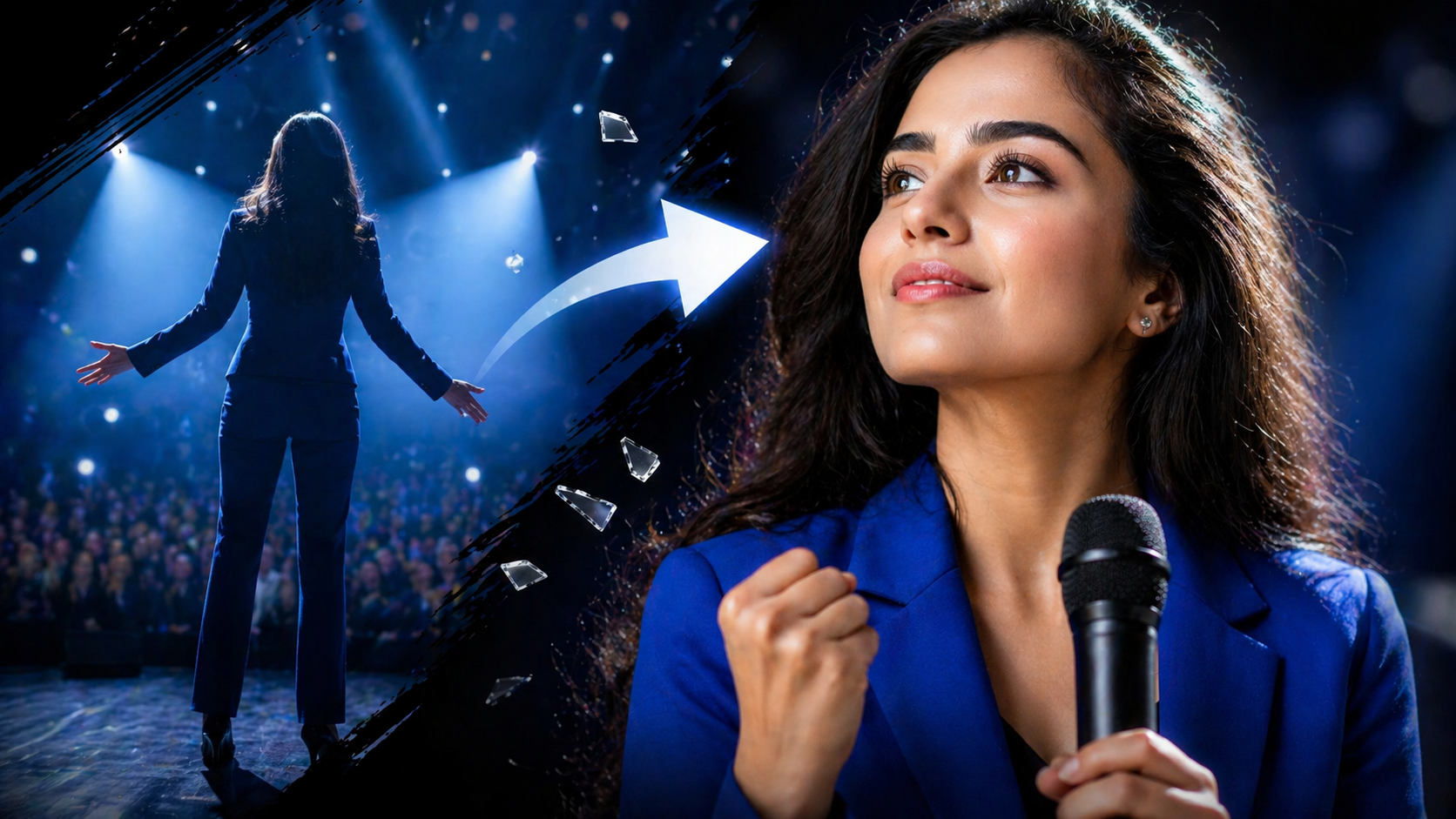
Introduction: the silent battle before the spotlight Your hands tremble. Your heart races. Your mind whispers doubts louder than your own voice. Stage fear is not weakness. It is a deeply human response to visibility, judgment, and expectation. Yet, here is the truth most people never realize: the very fear you are trying to escape is the same force that can elevate your performance beyond ordinary. This is not just about speaking or performing. This is about reclaiming control over your voice, your presence, and your future. Why stage fear feels so powerful Stage fear, often linked to performance anxiety, is rooted in survival instincts. Your brain perceives an audience as a threat. The spotlight feels like exposure. Judgment feels like danger. So your body reacts with fight, flight, or freeze. But here is the shift you must understand: Your body is not trying to stop you.It is trying to prepare you. That adrenaline you feel is energy. That tension is readiness. The problem is not the fear. The problem is misinterpreting it. The hidden cost of staying silent Every time you avoid stepping forward, something bigger is lost: You lose opportunities to be seenYou lose chances to leadYou lose moments that could redefine your path In business, education, leadership, or creativity, visibility is power. Those who speak, perform, and present shape outcomes. Those who stay silent get overlooked. If you do not confront stage fear now, it will quietly control your decisions for years. Reframing fear into fuel Instead of asking, “How do I eliminate fear?” ask a better question: “How do I use fear to perform better?” Top performers do not lack fear. They redirect it. Here is how: Label the feeling correctlySay to yourself: this is excitement, not fear. Research shows your brain responds differently when you reframe the emotion. Focus outward, not inwardFear grows when you think about yourself. Confidence grows when you think about your audience. Turn pressure into purposeYou are not performing to impress. You are performing to impact. Actionable strategies to overcome stage fear permanently 1. preparation that builds real confidence Confidence is not magic. It is built through repetition. Practice out loud, not silentlyRecord yourself and reviewSimulate real conditions before the actual performance When your brain recognizes familiarity, fear decreases. 2. the power of controlled breathing Your breath controls your nervous system. Use this simple method before stepping on stage:Inhale slowly for four secondsHold for four secondsExhale for six seconds This reduces anxiety and stabilizes your voice instantly. 3. visualize success in detail Your brain cannot fully distinguish between imagination and reality. Close your eyes and see yourself performing confidentlyImagine the audience reacting positivelyFeel the success before it happens This primes your mind to act accordingly. 4. start before you feel ready Perfection is the biggest enemy of performance. You will never feel completely readyYou will never feel completely fearless The breakthrough happens when you act despite that. 5. shift from perfection to connection Audiences do not want perfection. They want authenticity. Speak like a human, not a machineAllow small imperfectionsFocus on delivering value, not flawless delivery Connection beats perfection every time. The confidence loop: how courage compounds Every time you step forward, something powerful happens: You survive the fearYou gain evidence of capabilityYou build internal trust This creates a loop: Action leads to confidenceConfidence leads to bigger actionBigger action leads to transformation What feels impossible today becomes natural tomorrow. Real transformation begins with one decision There will always be reasons to wait: You need more practiceYou need more confidenceYou need the perfect moment But the truth is simple: The moment you have been waiting for is created by action, not preparation alone. Final thought: courage is not the absence of fear Courage is standing in front of fear and choosing to move forward anyway. The stage does not demand perfection.It demands presence. And once you take that step, everything changes.

Talent as a Form of Resistance and Hope: How Human Creativity Becomes Power Against Silence
Introduction: When Talent Becomes More Than Skill Talent is often misunderstood as entertainment, performance, or a personal advantage. In reality, talent is far more powerful. It is resistance. It is survival. It is hope shaped into action. In every society, every generation, and every community facing pressure, limitation, or silence, talent becomes a language that refuses to disappear. It becomes a way of saying: I exist, I matter, and I will be heard. In a world where many voices are ignored, where opportunities are uneven, and where expression is sometimes restricted by circumstance, talent becomes more than ability. It becomes identity. It becomes courage in motion. This is not just about art, music, writing, or performance. This is about the deeper truth: human creativity is one of the strongest forces of resistance and renewal. The Meaning of Talent in a World Under Pressure Talent is not only what people do well. It is what people do when they refuse to surrender to limitation. Across history, individuals and communities have used creativity to survive difficult conditions. Whether through storytelling, performance, innovation, or cultural expression, talent has always been a response to pressure. When words are restricted, people sing. When systems are heavy, people create. When silence is imposed, people express. This is why talent cannot be reduced to entertainment. It is a reaction to reality. It is a form of communication that survives even when everything else is controlled. Talent as Resistance: The Silent Revolution Resistance does not always look like conflict. Sometimes it looks like creation. Talent becomes resistance when it challenges limitation without violence. It is the artist who continues to paint despite rejection. It is the writer who tells uncomfortable truths. It is the performer who stands on stage despite fear, judgment, or doubt. Resistance through talent is powerful because it is difficult to stop. You can silence voices, but it is harder to silence creativity. You can limit platforms, but imagination finds new ways to exist. Every act of creation under pressure becomes a quiet revolution. Not loud, not destructive, but deeply transformative. This is the power of talent: it does not just survive systems, it redefines them. The Emotional Weight Behind Hidden Talent Behind every visible talent, there is often an invisible story. Many people carry abilities they never fully express. Some are limited by environment. Some by fear. Some by lack of opportunity. But the talent still exists, quietly shaping thoughts, dreams, and identity. This hidden potential creates emotional tension. It is the feeling of being capable but unseen. It is the pressure of knowing you have something valuable but not having the space to share it. And yet, even unexpressed talent is not wasted. It builds resilience. It forms imagination. It keeps hope alive in silence. The real danger is not lack of talent. The real danger is unrecognized talent that slowly loses belief in itself. Why Talent Is a Form of Hope Hope is not passive. Hope is created through action. Talent is one of its strongest forms. Every time someone writes, sings, builds, designs, or performs, they are participating in hope. They are imagining a different outcome. They are refusing to accept that current limitations are final. Talent creates a future that does not yet exist. That is why it is powerful. It is forward-looking by nature. Even in difficult environments, talent gives people a reason to continue. It creates meaning where meaning is missing. It builds identity where identity is questioned. Hope without action is fragile. Talent turns hope into something visible, measurable, and real. The Social Responsibility of Recognizing Talent Talent does not grow in isolation. It grows in recognition. Societies often underestimate how much potential is lost when talent is ignored. When people are not encouraged, supported, or guided, creativity does not disappear—it simply goes underground. Recognizing talent is not only about encouragement. It is about responsibility. It is about building systems where creativity is not rare but normal. When communities invest in talent, they invest in resilience. They build cultures that can adapt, express, and innovate even in uncertainty. Ignoring talent is not neutral. It is a loss of future possibility. Barriers That Silence Talent To understand the value of talent, we must also understand what suppresses it. Some of the most common barriers include: Lack of access to education or platforms Fear of judgment or rejection Economic pressure that prioritizes survival over expression Cultural limitations that discourage creativity Absence of mentorship or guidance These barriers do not eliminate talent. They delay it. They distort it. They sometimes bury it under years of silence. But even buried talent is not destroyed. It remains within people, waiting for conditions that allow it to re-emerge. The Turning Point: When Talent Is Activated There is a moment in every story of talent when everything changes. It may be a mentor who notices potential. It may be a platform that offers visibility. It may be a personal decision to stop hiding. That moment transforms everything. Because talent, once activated, does not remain small. It grows quickly. It expands identity. It changes direction of life. This is why opportunity matters so deeply. One chance can redefine an entire future. But the most important shift is internal: the moment a person stops asking whether they are good enough and starts asking how far they can go. Talent in the Digital Age: Amplification or Distraction Today, talent has more visibility than ever before. But visibility does not always equal value. Digital platforms have made it possible for anyone to share creativity instantly. This has created opportunity, but also noise. Many talented individuals struggle to stand out in environments saturated with content. This makes intention more important than ever. Talent must now be paired with clarity, consistency, and purpose. In the digital age, success is not only about being seen. It is about being remembered. It is about impact, not just attention. Why Talent Must Be Protected and Nurtured Talent is fragile before it becomes
How Creative Youth Can Build a Stronger Kashmir: The Rise of a Generation That Refuses to Be Silent
Kashmir stands at a turning point. Not defined by conflict, not limited by history, and not trapped by narratives written by others. A new force is rising quietly but powerfully—its youth. Creative, fearless, expressive, and deeply connected to their roots, this generation holds the power to reshape Kashmir into something stronger, more resilient, and globally recognized for its talent rather than its struggles. This is not just a hopeful idea. It is a responsibility. And the time to act is now. The untapped power of Kashmir’s creative youth Every street in Kashmir carries stories. Every home carries tradition. Every young mind carries potential. Yet for years, creativity has been seen as a hobby, not a path. That mindset must change. Creative youth are not just artists or entertainers. They are problem solvers, storytellers, innovators, and builders. They create culture. They shape perception. They drive economies. From filmmaking and photography to digital design, music, writing, fashion, and entrepreneurship—Kashmir’s youth are already creating. But many are doing it silently, without support, without recognition, and without structure. This is where transformation begins. Why creativity is the strongest weapon for change Economic strength does not only come from traditional industries. Today’s world runs on attention, ideas, and storytelling. Creative industries are billion-dollar ecosystems globally. Kashmir’s youth have something unique—authenticity. Raw, emotional, real storytelling that the world craves. When a young filmmaker captures the essence of Kashmir, it travels globally. When a designer fuses tradition with modern aesthetics, it creates a new identity. When a writer tells stories of resilience, it changes perception. Creativity builds: OpportunitiesJobsGlobal recognitionCultural preservationMental resilience Ignoring this power is not just a mistake—it is a loss of future. The barriers that must be broken now The biggest obstacle is not lack of talent. It is lack of belief, exposure, and systems. Many young people hesitate because: They fear judgmentThey lack financial supportThey don’t see clear career pathsThey are told to “play safe” This mindset is dangerous. It slowly kills innovation. If Kashmir wants growth, it must normalize creativity as a career, not a risk. Parents, educators, leaders, and communities must shift their thinking. Supporting creative youth is not optional anymore—it is essential for economic and cultural survival. Digital platforms: the gateway to global impact The internet has removed borders. A creator sitting in Kashmir can reach audiences in New York, London, Dubai, and beyond. Social media is not just for scrolling. It is a stage. A marketplace. A brand-building engine. Youth must be trained to: Build personal brandsCreate consistent contentTell compelling storiesMonetize their skillsCollaborate globally Those who understand this early will not just survive—they will dominate. From talent to transformation: what youth must do now Talent alone is not enough. Action is everything. Start creating daily, even without perfect toolsShare your work without waiting for validationLearn skills that match global demandCollaborate instead of competing blindlyTurn passion into a system, not a one-time effort Consistency beats talent when talent stays silent. Every post, every video, every design, every story is a step toward building not just a career—but a movement. The economic impact of a creative revolution Imagine thousands of Kashmiri youth building digital businesses, content brands, design studios, media houses, and cultural startups. This means: More employmentLess dependencyStronger local economyGlobal investment opportunities Creativity is not just expression—it is economy. The regions that invest in creative industries today will lead tomorrow. Kashmir has the raw material. It needs execution. Preserving identity while building the future There is a fear that modernization will erase culture. But the truth is the opposite. Creative youth are the bridge between tradition and innovation. Through content, design, storytelling, and art, they preserve heritage while making it relevant for the modern world. A song, a film, a fashion line, or a digital story can carry centuries of culture into the future. If youth do not tell their own stories, someone else will—and they may not tell it right. Urgency: why waiting is no longer an option Every day of delay is a lost opportunity. The world is moving fast. Trends change overnight. Platforms evolve constantly. Those who start now will lead. Those who wait will struggle to catch up. Kashmir does not need more observers. It needs creators, builders, and risk-takers. The future will not be built by those who watch—it will be built by those who act. A call to action for every young mind in Kashmir If you are creative, do not hide it.If you have ideas, do not delay them.If you want change, do not wait for permission. Start now. Start small. But start. Your voice matters. Your story matters. Your creativity matters. And together, it can build a Kashmir that is stronger, louder, and impossible to ignore.
The Power of Art During Difficult Times: Finding Strength, Hope, and Healing
In moments of uncertainty, despair, or personal struggle, the human spirit searches for outlets—ways to express, process, and understand emotions that words often cannot capture. Art has always been a beacon in such moments, offering solace, clarity, and an unshakable reminder of our resilience. From painting and music to dance, theater, and literature, art becomes more than creativity—it becomes a lifeline. Art as a Mirror of the Soul Difficult times force introspection. Pain, confusion, or grief often feels isolating. Yet, art provides a mirror to our inner world. When we engage in artistic expression, we confront our emotions head-on, giving them shape, color, and voice. A single brushstroke or musical note can articulate what words fail to convey, allowing us to face our emotions rather than suppress them. This confrontation is not just therapeutic—it is transformative. Healing Through Creation Creating art stimulates the brain in ways that soothe stress, anxiety, and depression. Neuroscientific studies have shown that artistic expression can release dopamine, the “feel-good” hormone, reducing mental tension and boosting emotional well-being. Whether it’s writing your thoughts in a journal, sketching your feelings, or composing music, art allows the mind to release its burdens. The act of creation is empowering. During a period when life feels out of control, choosing to create restores agency, reminding us that we can influence our inner world, even when external circumstances seem insurmountable. Connection and Community Through Art Difficult times are often accompanied by isolation. But art fosters connection and empathy. Sharing your creations or experiencing the work of others reminds us that we are not alone. Communities formed around art—online groups, local workshops, or social projects—offer shared understanding, compassion, and inspiration. In the darkest periods, these connections can spark hope and motivation, acting as a reminder that humanity is resilient, compassionate, and creative. Art as a Catalyst for Change Art is not only personal—it is powerful socially. Throughout history, periods of hardship have inspired revolutionary art that challenges norms, raises awareness, and ignites action. During wars, pandemics, or civil struggles, artists have given voice to the voiceless, documenting truths that demand attention. Even today, art continues to be a driving force, influencing minds, shaping perceptions, and empowering movements for positive change. Practical Ways to Harness Art During Tough Times Daily Creative Practice: Dedicate at least 15-30 minutes daily to sketching, painting, journaling, or composing music. Consistency enhances emotional clarity. Mindful Art Consumption: Listen to uplifting music, watch inspiring films, or explore online galleries. Absorbing art can calm the mind and shift perspective. Community Engagement: Join online art challenges, workshops, or local creative groups. Sharing your work fosters connection and encouragement. Transform Pain Into Purpose: Use personal struggles as inspiration for creative projects. Turning challenges into art can provide a sense of achievement and healing. Reflective Journaling: Write about your emotions and experiences, then pair them with visual or performance art to deepen understanding and insight. Why Now Matters Difficult times are inevitable, but the way we respond defines our journey. Art provides a proactive, accessible, and transformative tool for anyone navigating emotional turbulence. Ignoring the power of art is missing an opportunity to heal, connect, and transform your life. The sooner you embrace it, the sooner you reclaim control, clarity, and hope. Art is not a luxury—it is essential. It teaches us resilience, empathy, and self-expression. It reminds us that even in darkness, light can be created, shaped, and shared. By turning to art during challenging moments, we do more than survive—we grow, we connect, and we thrive.
Artists who turn talent into change: when creativity becomes a movement
There are moments in history when art is not just decoration, not just entertainment, not just expression. It becomes a voice that refuses to stay silent. Artists around the world have repeatedly proven that talent is not only a gift, it is a responsibility. When music, painting, film, poetry, design, photography, and performance collide with purpose, something powerful happens. People begin to listen. People begin to question. And most importantly, people begin to act. This article is not just about artists. It is about urgency. It is about realizing that creativity has the power to reshape societies, challenge injustice, heal communities, and inspire millions. If you are an artist, a creator, a student, or someone who believes ideas can change the world, this is your reminder that the moment to use your voice is now. The power of art in shaping society Art has always been one of the strongest forces behind social awareness and transformation. Long before social media, long before viral campaigns, artists were already speaking about inequality, freedom, identity, culture, and human rights. A painting could spark debate. A song could ignite a movement. A film could change how an entire generation sees the world. Why does art influence people so deeply? Because art speaks directly to emotion. Facts inform us, but stories move us. A powerful mural in a city street can stop a person in their tracks and force them to think. A song about injustice can echo in someone’s mind for years. This emotional connection is what turns passive viewers into active participants. Today, the world is facing climate challenges, social divisions, mental health struggles, cultural identity shifts, and rapid technological change. This is exactly why artists are needed more than ever. Creativity can open conversations that politics and traditional systems sometimes fail to start. Artists as catalysts for change When artists decide to use their talent for a cause, they transform from creators into catalysts. Their platforms become bridges between awareness and action. Instead of simply producing work, they ignite discussions that influence communities, institutions, and even governments. Artists who inspire change often share a few powerful traits: They speak truth even when it is uncomfortable. They represent voices that are often unheard. They transform complex issues into relatable human stories. They use creativity to inspire hope, not just criticism. The world remembers artists who dared to create with purpose. These creators did not wait for the perfect time. They understood that silence can sometimes be the biggest obstacle to progress. Music that moves movements Music is one of the most powerful tools for inspiration and social impact. A single song can cross borders, languages, and cultures in seconds. Throughout history, musicians have used their lyrics and performances to highlight injustice, inspire unity, and encourage resilience. When artists create music with meaning, it becomes more than sound. It becomes a message carried by millions of listeners. A protest song can motivate a crowd. A hopeful anthem can comfort people during difficult times. A powerful performance can shift public attention toward important global issues. Music that inspires change often carries emotion that audiences can feel instantly. People may forget speeches, but they rarely forget songs that touched their hearts. This is why musicians who speak about real struggles and real dreams continue to influence generations. Visual artists transforming public spaces Visual artists, painters, illustrators, and muralists have also been at the center of social transformation. Public art has the ability to transform ordinary streets into powerful storytelling spaces. A wall can become a message. A painting can become a movement. Murals addressing equality, environmental awareness, education, and cultural identity have become symbols of resistance and hope across cities worldwide. These works do something important. They take important conversations out of closed rooms and place them directly in front of everyday people. When communities see their stories reflected in art, they feel seen. When difficult truths appear on city walls, society is forced to acknowledge them. This is the quiet but powerful influence of visual artists who choose to create with intention. Film and storytelling that awaken minds Filmmakers, writers, and storytellers hold another extraordinary power. Stories shape how people understand the world. A documentary can reveal hidden truths. A film can create empathy for communities many people have never encountered. A story can challenge stereotypes that existed for decades. Artists working in film and storytelling are not just entertaining audiences. They are building understanding. When people emotionally connect to a story, they become more open to learning and change. In many cases, films have led to global conversations about human rights, climate issues, cultural identity, education, and mental health. This is the ripple effect of storytelling used with purpose. Digital creators and the new wave of influence The modern world has created a new generation of artists who inspire change through digital platforms. Social media creators, designers, animators, and content storytellers now reach millions instantly. Their art travels faster than ever before. This digital era has created an opportunity that previous generations of artists did not have. A message that once took years to spread can now reach the world in minutes. However, with this power comes responsibility. Artists today must decide how they will use their influence. Will they simply follow trends, or will they create work that adds value, awareness, and impact? The creators who stand out are those who combine creativity with purpose. They do not just aim for attention. They aim for transformation. Why the world urgently needs purpose-driven artists Many people believe change is the responsibility of leaders, governments, or institutions. But history shows something different. Cultural shifts often begin with artists. Artists influence how people think. Artists influence how people feel. Artists influence what society talks about. This is why the role of artists in modern society is not optional. It is essential. There are young creators right now who feel their ideas are too small, their voice is too quiet, or their work is not important

How Art Can Ignite Change: The Power of a Song, a Dance, or a Poem to Spark Social Awareness
In a world overwhelmed by information, where countless voices compete for attention, art has an unmatched ability to cut through the noise and ignite social consciousness. A song, a dance, or a poem is not just a form of entertainment—it is a powerful medium to influence minds, evoke emotions, and drive meaningful action. Throughout history, creative expressions have been the catalysts for social movements. They inspire empathy, awaken dormant awareness, and compel audiences to confront uncomfortable truths. From protest songs that challenged systemic injustice to poetic verses that gave voice to marginalized communities, the ability of art to spark social awareness remains unparalleled. Songs That Speak Louder Than Words Music has an extraordinary capacity to resonate with people across ages, cultures, and languages. A song can evoke emotions instantly, making complex social issues relatable and memorable. Consider iconic songs that have challenged injustice, promoted equality, or highlighted environmental concerns. When a song touches the heart, it does more than entertain—it mobilizes action. It can encourage people to attend rallies, support campaigns, or share crucial messages on social platforms. The emotional resonance of music makes it an urgent tool for social advocacy, compelling listeners to think, feel, and act. Dance: Movement That Moves Minds Dance is a universal language that transcends barriers. Through movement, dancers can communicate stories of struggle, hope, resilience, and unity. Every gesture, step, and rhythm carries meaning, transforming a performance into a living testament of social realities. Social awareness campaigns leveraging dance often see profound engagement. Audiences feel the message in their bodies and emotions, creating an immersive experience that inspires reflection and conversation. The immediacy of live or shared dance performances makes it a dynamic catalyst for urgent social conversations. Poetry: Words That Awaken Consciousness Poetry is the art of distilling emotion and truth into words that linger in the mind long after they are read or heard. A single verse can expose injustice, challenge cultural norms, or illuminate the struggles of the unheard. Poetry not only connects readers to human experiences but also empowers them to reflect and participate in social transformation. By turning issues into narratives, poetry fosters empathy and understanding. When people relate to a story, they are more likely to engage in social initiatives, community service, or advocacy. Every carefully chosen word in a poem can become a spark that ignites widespread awareness. Turning Art into Action The potential of songs, dances, and poems is not limited to inspiration—they drive tangible social change when paired with action. Here’s how to make art a tool for impact: Create with a purpose: Focus on social issues that matter, whether it’s gender equality, environmental preservation, or human rights. Amplify through social media: Share your creations widely. Platforms like Instagram, YouTube, and TikTok can help messages go viral. Collaborate with communities: Involve affected communities to ensure authenticity and amplify real voices. Host interactive events: Workshops, performances, and readings encourage participation and discussion. Call for action: Always provide audiences with clear ways to contribute—sign petitions, join campaigns, or support organizations. Art’s emotional appeal creates a sense of urgency. When people feel the message in their hearts, they are compelled to act, spreading awareness exponentially. The combination of creativity, emotion, and action ensures that social awareness moves from thought to movement. Why We Cannot Ignore This Power Every song sung, every dance performed, and every poem written has the potential to reshape society. In a world filled with apathy, art has the unique ability to awaken empathy and provoke reflection. Waiting for systemic change alone is no longer enough; communities, organizations, and individuals must leverage the transformative power of creative expression to drive social consciousness and urgent action. Now is the time to embrace this power. Your song could inspire a generation, your dance could bridge divides, your poem could give voice to the unheard. The world is waiting—let art be your voice, and action be your response.
The Art of Videography: Capturing Life Through Motion and Emotion
In a world saturated with visuals, videography emerges as one of the most powerful forms of art, bridging the gap between storytelling, emotion, and technology. Unlike traditional photography or painting, videography combines motion, sound, light, and timing to create a living, breathing narrative that resonates deeply with audiences. But what type of art is videography, and why does it hold such transformative power in the modern creative landscape? Videography as a Visual Art Form Videography is primarily a visual art because it relies on imagery to communicate ideas and evoke feelings. Each frame is meticulously crafted, considering composition, lighting, color grading, and perspective. Yet, it surpasses static visuals by introducing movement, allowing a narrative to unfold in real time. This dynamic quality enables videographers to convey emotions, moods, and atmospheres that a single image can never achieve. It is also a storytelling art, blending cinematic techniques with real-life events. From documentary filmmaking to cinematic advertisements, videography transforms ordinary moments into extraordinary stories. Through thoughtful editing, sound design, and pacing, it creates a rhythm that captures the audience’s attention and imagination. The Emotional Power of Videography At its core, videography is about connection. It transcends language barriers, allowing audiences from different cultures and backgrounds to feel the same emotion, whether joy, nostalgia, suspense, or inspiration. This emotional resonance makes videography an invaluable tool for marketers, educators, and artists alike. It doesn’t just show the world—it makes the viewer feel the world. Consider a wedding videographer capturing the fleeting glance of a bride or the subtle smile of a groom. These moments, often overlooked in daily life, are immortalized through motion, light, and sound. Videography turns memories into timeless experiences, providing a deeply personal and lasting impact. Types of Videography: Exploring the Spectrum Videography is not limited to one style or purpose. It encompasses several forms, each with its own artistic approach: Cinematic Videography – Focused on creating films or short movies with a strong narrative, cinematic videography emphasizes storytelling, lighting, and composition to deliver a movie-like experience. Event Videography – Capturing weddings, concerts, conferences, or live events, this type focuses on documenting real-life moments with authenticity and immediacy. Commercial and Marketing Videography – Used by brands and businesses to tell compelling stories, promote products, or engage audiences through high-quality visual campaigns. Documentary Videography – Aimed at revealing truths, this style blends investigative storytelling with factual content, giving viewers insight into real-world events. Experimental and Artistic Videography – Explores creative expression through abstract visuals, innovative techniques, and artistic interpretations, pushing the boundaries of conventional storytelling. Each type demonstrates that videography is not just a skill—it is a form of artistic expression, merging creativity with technology to inspire, inform, and entertain. Why Videography Matters Today In the age of digital content, videography has become more than just an art—it is a necessity for communication, branding, and cultural expression. Social media platforms, streaming services, and online education have made video content the most engaging and shareable form of media. Businesses, influencers, and creators can no longer rely solely on static images or written content. Videography allows them to connect deeply with their audience, drive engagement, and evoke powerful emotional responses. From a personal perspective, videography gives individuals the ability to preserve memories, share experiences, and influence perceptions. It empowers storytellers to not only show life as it is but also as it could be—beautiful, dramatic, or transformative. Actionable Steps to Harness the Art of Videography Invest in Learning the Basics – Understand framing, lighting, camera settings, and editing software. Mastering these fundamentals is essential for creating compelling visuals. Focus on Storytelling – Every great video has a narrative. Identify your story, your message, and your audience before filming. Experiment with Techniques – Use motion, sound, slow motion, drone shots, or creative transitions to make your content visually striking. Leverage Emotional Connection – Engage your audience by highlighting relatable moments, raw emotions, or inspiring journeys. Optimize for Platforms – Consider the formats, lengths, and styles best suited for social media, websites, or streaming platforms to maximize reach. Videography is more than a profession or hobby—it is a journey to capture life’s essence, one frame at a time. Every story told through video has the potential to move, educate, and inspire countless individuals across the globe. Conclusion Understanding what type of art videography is reveals its profound versatility. It is a visual, storytelling, and emotional art form that transcends traditional boundaries, combining creativity, technology, and human connection. Whether you are an aspiring filmmaker, a social media creator, or a business looking to connect with your audience, videography is your canvas—and every moment you capture is a masterpiece in motion. Now is the time to embrace videography, explore its endless possibilities, and turn your visions into captivating stories. Don’t just watch life—capture it, shape it, and share it with the world.

The Technical Art of Show Production: Where Creativity Meets Precision and Every Second Costs Money
Introduction: The Invisible Power Behind Every Unforgettable Show Behind every breathtaking concert, corporate summit, fashion runway, theater performance, or product launch, there is a powerful force most audiences never see. It is not just talent on stage. It is not just creativity. It is technical mastery. The Technical Art of Show Production is where imagination transforms into reality through precision engineering, advanced technology, and flawless coordination. It is the difference between a mediocre event and a moment that lives forever in memory. If you are an event organizer, entrepreneur, creative director, brand strategist, production manager, or aspiring technical professional, you must understand one thing clearly: technical excellence is no longer optional. It is the backbone of experience. What Is The Technical Art of Show Production? The Technical Art of Show Production refers to the strategic integration of: Lighting design Audio engineering Stage construction Visual effects and projection mapping Rigging and structural engineering Live broadcasting and streaming systems Automation and digital control systems It is the science behind spectacle. The architecture behind emotion. Modern audiences expect immersive experiences. They expect clarity of sound, cinematic visuals, seamless transitions, and zero technical glitches. One failure can damage reputation instantly. One flawless execution can elevate a brand permanently. Why Technical Production Determines Event Success 1. Audience Experience Is Everything People no longer attend events. They experience them. Poor lighting dulls emotion. Weak audio destroys impact. Delays break momentum. Technical precision amplifies storytelling. It enhances emotional connection. It transforms passive viewers into active participants. If you are investing in marketing, branding, or artist talent but neglecting production quality, you are building on a weak foundation. 2. Brand Reputation Is Built On Execution In corporate events, product launches, and international conferences, technical failure signals incompetence. Smooth transitions signal professionalism. When global brands like Apple or large-scale festivals execute their productions flawlessly, it is not luck. It is meticulous technical planning, rehearsals, and contingency preparation. Excellence in show production communicates authority without saying a word. 3. Technology Is Evolving Faster Than Ever Today’s production world integrates: LED walls and immersive displays Augmented reality and virtual reality Hybrid event streaming platforms AI-driven lighting and sound systems Automated stage movements Staying outdated is not neutral. It is falling behind. The technical art of show production now demands constant learning, innovation, and adaptation. Core Pillars of Technical Show Production Lighting Design: Sculpting Emotion Lighting does more than illuminate. It directs attention. It shapes mood. It builds tension. Professional lighting designers use color psychology, angles, intensity control, and dynamic programming to guide emotional response. The right lighting can make a small stage feel grand. The wrong lighting can make a grand stage feel empty. Audio Engineering: Clarity Is Power Sound defines credibility. Clear, balanced, distortion-free audio ensures message delivery. In conferences, it ensures authority. In concerts, it ensures immersion. In theater, it ensures storytelling depth. Modern sound systems require acoustic mapping, frequency balancing, and real-time monitoring. There is no room for improvisation when thousands are listening. Stage Design And Structural Precision Stage design combines aesthetics with safety. Every rig, truss, platform, and suspended equipment must meet engineering standards. Show production is not just art. It is structural science. One miscalculation can risk lives and destroy events. Visual Technology And Digital Integration Projection mapping, LED panels, holographic effects, synchronized video content, and live broadcast integration are now industry standards. Hybrid events have become normal. Your technical production must serve both in-person and virtual audiences simultaneously. If your online stream quality is poor, half your audience disconnects instantly. The Emotional Side Of Technical Mastery This industry is intense. Long nights. Rehearsals. Troubleshooting under pressure. Problem-solving seconds before showtime. But when the lights hit perfectly. When the sound resonates flawlessly. When the audience stands and applauds — the invisible technical team becomes the silent architect of magic. This is not just a profession. It is responsibility. It is precision under pressure. It is controlled chaos executed beautifully. Why You Must Take Technical Production Seriously Now The event and entertainment industry is more competitive than ever. If you are: An event planner trying to scale A production company aiming for bigger clients A brand launching premium experiences A creative professional entering live entertainment You must upgrade your technical standards. Invest in skilled technicians. Invest in rehearsals. Invest in quality equipment. Invest in safety training. Because in show production, there are no second chances once the curtain rises. Future Trends In Show Production You Cannot Ignore AI-controlled lighting systems Immersive 360-degree staging Sustainable and eco-friendly production setups Real-time audience interaction technology Data-driven event experience optimization The future belongs to production teams who combine art, engineering, and innovation seamlessly. Final Call To Action The Technical Art of Show Production is not backstage support. It is strategic power. If you want unforgettable events, premium clients, stronger brand positioning, and audience loyalty, start treating technical production as your primary investment. Study it. Master it. Respect it. Because when the spotlight turns on, excellence is the only option.