


By Kashmir Got Talent A vision powered by The Furniture Times (TFT), Furniture Industry Search Engine (FISE), FISE LIVE, and the FISE Searchology Inclusion System™ The Biggest Threat to a Great Business May Not Be Competition. It May Be Invisibility. Some businesses have excellent products but struggle to attract customers. Some artisans produce extraordinary work, yet their creations remain known only within their local communities. Some small manufacturers have the skills, machinery, and experience to serve international markets but rarely receive enquiries beyond their immediate surroundings. And some talented creators spend years building something valuable without ever receiving the recognition their work deserves. Why? Because there is a problem that many entrepreneurs underestimate: the invisible business problem. A business can exist without being discovered. A product can be exceptional without reaching the right buyer. An artisan can possess remarkable skills without having an audience. A company can operate for years without establishing a meaningful digital identity. In today’s increasingly connected economy, being good at what you do is important. But being discoverable is becoming equally important. Think about it. When someone needs a product, supplier, manufacturer, designer, or service provider, where do they begin? They search. They explore. They compare. They look for information that helps them decide whom to trust. If your business is missing from that discovery journey, you may never get the opportunity to demonstrate your value. This is the invisible business problem, and it deserves the attention of every entrepreneur, SME, manufacturer, artisan, independent maker, and grassroots creator. Through the vision of Kashmir Got Talent, alongside The Furniture Times (TFT), Furniture Industry Search Engine (FISE), FISE LIVE, and the FISE Searchology Inclusion System™, a bigger conversation is emerging: how can valuable businesses and talented people become easier to discover in a world where attention and visibility influence opportunity? The answer begins with a simple principle: You cannot build opportunities around a business that the right people cannot find. 1. What Is the Invisible Business Problem? The invisible business problem occurs when a business, creator, or skilled professional has something valuable to offer but lacks sufficient digital visibility, discoverability, or recognition among relevant audiences. It does not necessarily mean the business has no website, no social media account, or no online presence. In fact, many businesses are already online. They publish photographs, upload videos, share promotional posts, create websites, and announce new products. Yet they continue to struggle with enquiries, customer acquisition, and meaningful business connections. The problem is that simply being online is not the same as being discoverable. Imagine a furniture manufacturer producing quality wooden furniture. Its workshop is operational, its workers are experienced, and its products are ready for the market. However, an international retailer searching for a suitable supplier cannot easily identify the manufacturer. The manufacturer exists. The products exist. The capabilities exist. But the connection does not happen. Now consider a talented artisan who creates handmade products. Their craftsmanship is excellent, but they have limited digital exposure. Potential customers who would appreciate and purchase those products may never encounter their work. This is not necessarily a talent problem. It is a visibility problem. The same situation affects small businesses across different industries. A business may have: Excellent products but limited online discoverability. Valuable experience but no clear digital identity. Strong production capabilities but little international exposure. Unique craftsmanship but insufficient storytelling. A website but limited visibility in relevant searches. Social media activity but few qualified enquiries. Ambition to grow but limited access to industry networks. These challenges reveal an important distinction: business quality and business visibility are two different things. Entrepreneurs must work on both. 2. Why Great Businesses Remain Invisible While Competitors Get Attention It is tempting to assume that the best products automatically attract the most customers. Unfortunately, markets do not always work that way. Customers cannot evaluate a business they never discover. Buyers cannot contact a supplier they cannot identify. Potential partners cannot build relationships with companies they do not know exist. Meanwhile, a competitor with a stronger digital presence may receive more attention, even when both businesses offer comparable products. This does not necessarily mean the competitor has a better product. It may simply be easier to find, understand, and contact. Several factors contribute to this situation. Weak digital identity Many small businesses do not communicate their identity consistently. Their business names, descriptions, product information, contact details, and branding may differ across platforms. This makes it harder for people to understand who they are and what they offer. A strong digital identity helps customers recognize a business and understand its value. Poor discoverability A business may publish content without considering how its intended audience searches. For example, a furniture manufacturer may describe itself using internal company terminology, while buyers search for specific product categories, materials, manufacturing capabilities, or supplier locations. When business information does not reflect how customers search, relevant audiences may struggle to find it. Limited storytelling Businesses often focus exclusively on selling products. They publish prices, promotional graphics, and product photographs but rarely explain their experience, capabilities, craftsmanship, history, or values. People need information before they develop confidence in a business. A compelling story can help customers understand what makes a company different. Dependence on social media Social media can help businesses build audiences, but relying on social platforms alone creates limitations. Content competes for attention, platform algorithms change, and followers do not automatically become customers. A business needs a broader digital presence that includes discoverable information, useful content, and reliable ways to establish contact. Limited marketing resources Large companies may have dedicated teams for branding, advertising, public relations, and digital marketing. Smaller businesses often have to manage everything themselves. The result is an uneven digital environment in which talented entrepreneurs may struggle to compete for attention. The challenge is not simply to encourage more advertising. It is to improve access to meaningful discovery opportunities. 3. Kashmir Got Talent: Making Visibility a Conversation About People, Potential and Opportunity Talent exists everywhere. It exists in small
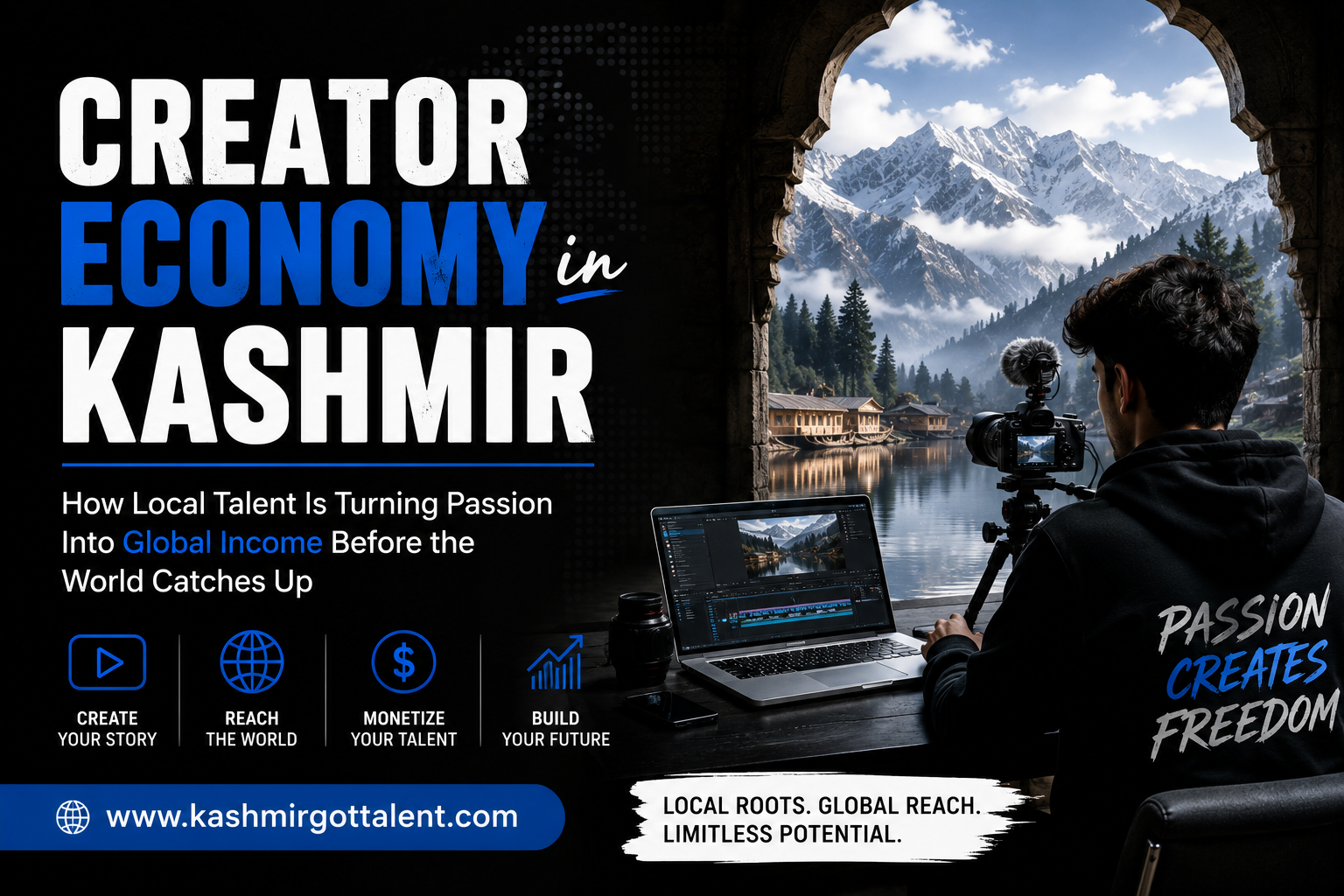
Creator Economy in Kashmir: How Local Talent Is Turning Passion Into Global Income Before the World Catches Up
Creator Economy in Kashmir: A new era of opportunity For generations, Kashmir has been known for its breathtaking landscapes, rich culture, exceptional craftsmanship, unique traditions, and resilient people. Today, another remarkable transformation is quietly taking place. A new generation of creators is emerging, proving that talent no longer needs permission, expensive offices, or big city addresses to reach the world. The creator economy has opened doors that were unimaginable just a decade ago. A student with a smartphone, a photographer capturing Kashmir’s natural beauty, an artisan preserving centuries-old traditions, a teacher sharing valuable lessons, a chef introducing authentic Kashmiri cuisine, or an entrepreneur building an online brand can now connect with audiences across continents. The digital revolution has changed the rules forever. Success is no longer reserved for celebrities or multinational corporations. It now belongs to people who consistently create value. For Kashmir, this represents one of the biggest economic opportunities of the decade. What is the creator economy? The creator economy is an ecosystem where individuals earn income by producing digital content, building online communities, selling expertise, offering services, and creating products for audiences across various platforms. Creators are no longer limited to entertainment. They include: Digital educators Bloggers Writers Photographers Videographers Podcasters Graphic designers Software developers Digital marketers Craft makers Fashion designers Artists Musicians Public speakers Fitness coaches Travel storytellers Food creators Business consultants Freelancers Community builders Every skill can become an online business when paired with consistency and the right digital strategy. Why Kashmir is perfectly positioned for the creator economy Kashmir possesses advantages that many regions cannot easily replicate. Its natural beauty attracts global attention. Its cultural heritage fascinates international audiences. Its handmade crafts represent centuries of excellence. Its youth population is increasingly digitally connected. Its stories remain largely untold. The world is actively searching for authentic voices. Kashmir has thousands waiting to be discovered. Creators who understand storytelling can transform local experiences into global opportunities. The rise of digital entrepreneurship Traditional employment remains important, but digital entrepreneurship is rapidly becoming another path toward financial independence. A creator does not have to leave Kashmir to build a worldwide audience. Instead of relocating, creators can export knowledge, creativity, experiences, education, culture, products, and services directly through the internet. Digital entrepreneurship allows people to create income while maintaining flexibility, independence, and ownership over their work. Income opportunities for creators in Kashmir The creator economy offers multiple streams of income rather than relying on one salary. These include: Advertising revenue Brand partnerships Affiliate marketing Digital courses Paid newsletters Membership communities Freelance consulting Photography licensing Video production Podcast sponsorships Public speaking Digital products Templates E-books Online coaching Selling traditional Kashmiri products globally Travel experiences Educational workshops Stock photography Content licensing The more diversified the income sources, the stronger the long-term business becomes. Why authenticity wins One of the biggest misconceptions is believing creators need expensive equipment. Audiences are increasingly choosing authenticity over perfection. People want genuine stories. They want real experiences. They want meaningful conversations. Creators from Kashmir possess something impossible to manufacture. Authentic culture. Authentic heritage. Authentic traditions. Authentic resilience. These qualities naturally attract loyal communities. The power of storytelling Stories create emotional connections. Facts inform. Stories inspire action. A creator documenting traditional handicrafts is preserving history. A travel creator is promoting tourism. A food creator is preserving recipes. A language educator is protecting culture. A photographer is creating visual history. Every piece of content becomes part of Kashmir’s digital legacy. Building a personal brand The future belongs to trusted individuals. People increasingly follow people rather than companies. A strong personal brand is built through consistency, credibility, expertise, and authenticity. Creators should focus on: Sharing valuable knowledge Publishing regularly Helping audiences solve problems Building trust Listening to their community Creating long-term relationships Trust becomes the foundation of every successful creator business. Challenges creators face Every opportunity comes with obstacles. Creators often struggle with: Inconsistent internet connectivity Limited access to funding Lack of professional mentorship Content burnout Monetization challenges Negative criticism Algorithm changes Competition These challenges are real. However, creators who continuously learn, adapt, and improve often outperform those waiting for perfect conditions. Progress always beats perfection. Skills every creator should develop Success requires more than creativity. Creators should continuously improve: Content writing Public speaking Photography Video editing Graphic design Marketing Search optimization Brand building Community management Business strategy Artificial intelligence tools Data analytics Negotiation Financial management Every new skill increases earning potential. Artificial intelligence is creating new opportunities Artificial intelligence is becoming an essential assistant rather than a replacement. Creators can use AI to: Generate ideas Improve writing Translate content Create designs Edit videos Analyze audience behavior Research topics Plan marketing campaigns Increase productivity Creators who combine human creativity with modern technology will have a significant competitive advantage. Why consistency beats viral success Many creators chase one viral post. Successful creators build long-term trust. Publishing consistently creates stronger relationships than chasing temporary attention. Growth compounds over time. Every article. Every video. Every podcast. Every social media post. Every newsletter. Every project contributes to a larger digital reputation. The future belongs to creators The global creator economy continues expanding every year. Businesses increasingly collaborate with independent creators. Consumers increasingly trust creators more than traditional advertising. Educational content continues to grow. Digital communities continue to expand. Remote work continues to create new opportunities. Kashmir has the potential to become a significant contributor to this global movement. The creators who begin today will likely become tomorrow’s industry leaders. Action plan to begin today Start with the skills you already possess. Choose one area of expertise. Identify your audience. Create valuable content consistently. Learn basic search optimization. Build a website. Grow an email list. Engage with your community. Continue learning. Treat your creative passion like a professional business. The best time to become a creator was years ago. The second-best time is today. Final thoughts The creator economy is not merely another online trend. It represents a profound transformation in how people learn, communicate, earn, and build meaningful careers. For Kashmir, it
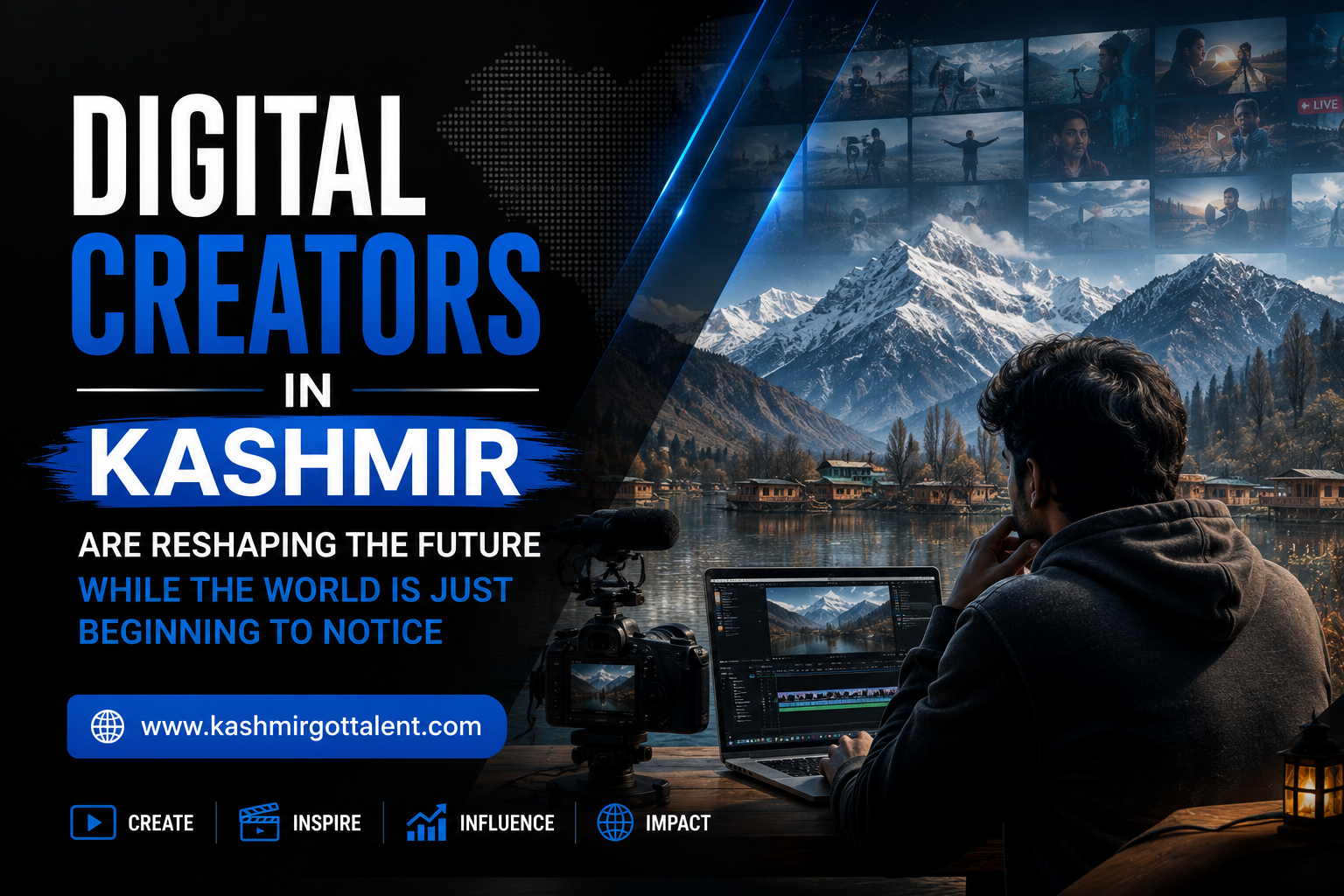
Digital creators in Kashmir are reshaping the future while the world is just beginning to notice
The silent digital revolution in Kashmir that every aspiring creator should learn from before it is too late The digital economy has transformed the way people build careers, create businesses, and influence communities. Across the world, millions of people are earning a living through digital content, online education, freelancing, storytelling, entertainment, photography, filmmaking, blogging, podcasting, graphic design, artificial intelligence, and social media marketing. Today, Kashmir is becoming an important part of this global movement. A new generation of digital creators in Kashmir is proving that geographical boundaries no longer define success. With creativity, consistency, and access to the internet, talented individuals are reaching audiences across continents. Their stories are inspiring thousands of young people who once believed that opportunities only existed in major metropolitan cities. The digital creator economy is no longer a trend. It is becoming one of the strongest career opportunities of this decade. Those who start building their digital presence today are preparing themselves for opportunities that may not even exist yet. Those who delay may find themselves struggling to catch up in an increasingly competitive digital world. Why digital creators matter more than ever Digital creators are no longer just influencers posting photographs or short videos. They have become educators, entrepreneurs, journalists, artists, filmmakers, musicians, developers, consultants, photographers, travel experts, health advocates, technology reviewers, and business owners. Every piece of valuable content creates opportunities to educate people, solve problems, inspire change, and generate income. Modern businesses now depend heavily on creators because audiences trust authentic people more than traditional advertisements. Brands actively collaborate with creators who have built loyal communities around valuable content. For Kashmir, this represents a remarkable opportunity. Kashmir has everything needed to become a global creator hub Kashmir possesses extraordinary advantages that naturally support content creation. Its breathtaking landscapes attract travel enthusiasts from around the world. Its centuries-old traditions inspire artists, historians, writers, and educators. Its unique cuisine attracts food lovers searching for authentic experiences. Its craftsmanship fascinates international buyers looking for handmade products. Its entrepreneurs continue launching innovative startups. Its youth are highly creative and eager to embrace new technologies. These strengths provide endless opportunities for original storytelling that global audiences actively search for every day. Types of digital creators emerging across Kashmir The creator economy continues expanding into multiple industries. Travel creators showcase hidden destinations. Food creators introduce authentic Kashmiri cuisine. Fashion creators celebrate traditional and modern styles. Technology creators review gadgets, software, and artificial intelligence tools. Educational creators teach languages, competitive exams, coding, and professional skills. Business creators share entrepreneurship lessons. Lifestyle creators document everyday experiences. Wildlife photographers capture extraordinary natural beauty. Filmmakers produce documentaries that preserve cultural heritage. Musicians introduce traditional sounds to international audiences. Artists and designers promote local creativity through digital platforms. Each creator contributes to a stronger digital identity for Kashmir. Why now is the perfect time to become a digital creator The creator economy continues growing rapidly. Artificial intelligence helps creators produce higher-quality content. Short-form videos receive billions of daily views. Long-form educational content builds long-term authority. Podcasts continue attracting professional audiences. Newsletters create direct relationships with readers. Blogs remain one of the strongest long-term sources of organic traffic. Search engines increasingly reward helpful, trustworthy, and experience-driven content. Generative AI platforms recommend authoritative content to users searching for answers. Voice search continues increasing worldwide. This means creators who consistently publish valuable content have more opportunities than ever before. Challenges digital creators in Kashmir still face Although opportunities continue growing, creators also face several obstacles. Limited awareness about monetization. Lack of professional mentorship. Difficulty accessing international collaborations. Inconsistent internet connectivity in certain regions. Limited investment in creative industries. Fear of criticism and public judgment. Difficulty maintaining consistency. Competition from established creators worldwide. These challenges should not discourage aspiring creators. Instead, they should motivate creators to continuously improve their skills, build resilience, and embrace lifelong learning. Essential skills every digital creator should master Content writing. Storytelling. Photography. Videography. Video editing. Graphic design. Artificial intelligence tools. Search optimization. Brand building. Public speaking. Personal branding. Social media marketing. Audience engagement. Email marketing. Analytics. Consistency. Learning these skills creates opportunities that extend far beyond content creation. How digital creators can build a sustainable career Choose one niche. Understand your audience. Create helpful content consistently. Focus on quality instead of quantity. Build trust before promoting products. Diversify income sources. Develop your own website. Publish articles regularly. Create videos across multiple platforms. Build an email community. Collaborate with other creators. Continue learning emerging technologies. Stay authentic. Creators who consistently solve problems become trusted experts. Ways digital creators in Kashmir can generate income Brand partnerships. Affiliate marketing. Sponsored content. Digital products. Online courses. Consulting services. Freelance work. Photography licensing. Video production. Membership communities. Paid newsletters. Advertising revenue. Public speaking. Workshops. Event hosting. Business collaborations. The possibilities continue expanding every year. The growing importance of artificial intelligence Artificial intelligence is changing how creators research, edit, translate, optimize, and distribute content. Instead of replacing creators, AI helps them work faster while allowing more time for creativity and innovation. Creators who combine human storytelling with responsible AI assistance will likely lead the next generation of digital entrepreneurship. Why authenticity will always outperform imitation Algorithms constantly evolve. Platforms change. Technologies advance. Authenticity remains timeless. Audiences connect with real stories, genuine experiences, honest opinions, and meaningful conversations. The most successful creators are not necessarily those with the biggest budgets. They are those who consistently create valuable content that improves people’s lives. Kashmir’s opportunity to become a global digital voice Around the world, audiences are searching for authentic stories from places they rarely experience firsthand. Kashmir has countless untold stories waiting to reach international audiences. Every village. Every entrepreneur. Every artist. Every student. Every innovator. Every craftsman. Every traveler. Every educator. Every business. Every success story. Digital creators have the power to document this transformation for future generations while building successful careers at the same time. The future belongs to those who create The creator economy is not slowing down. Businesses need creators. Communities need educators. Tourism needs
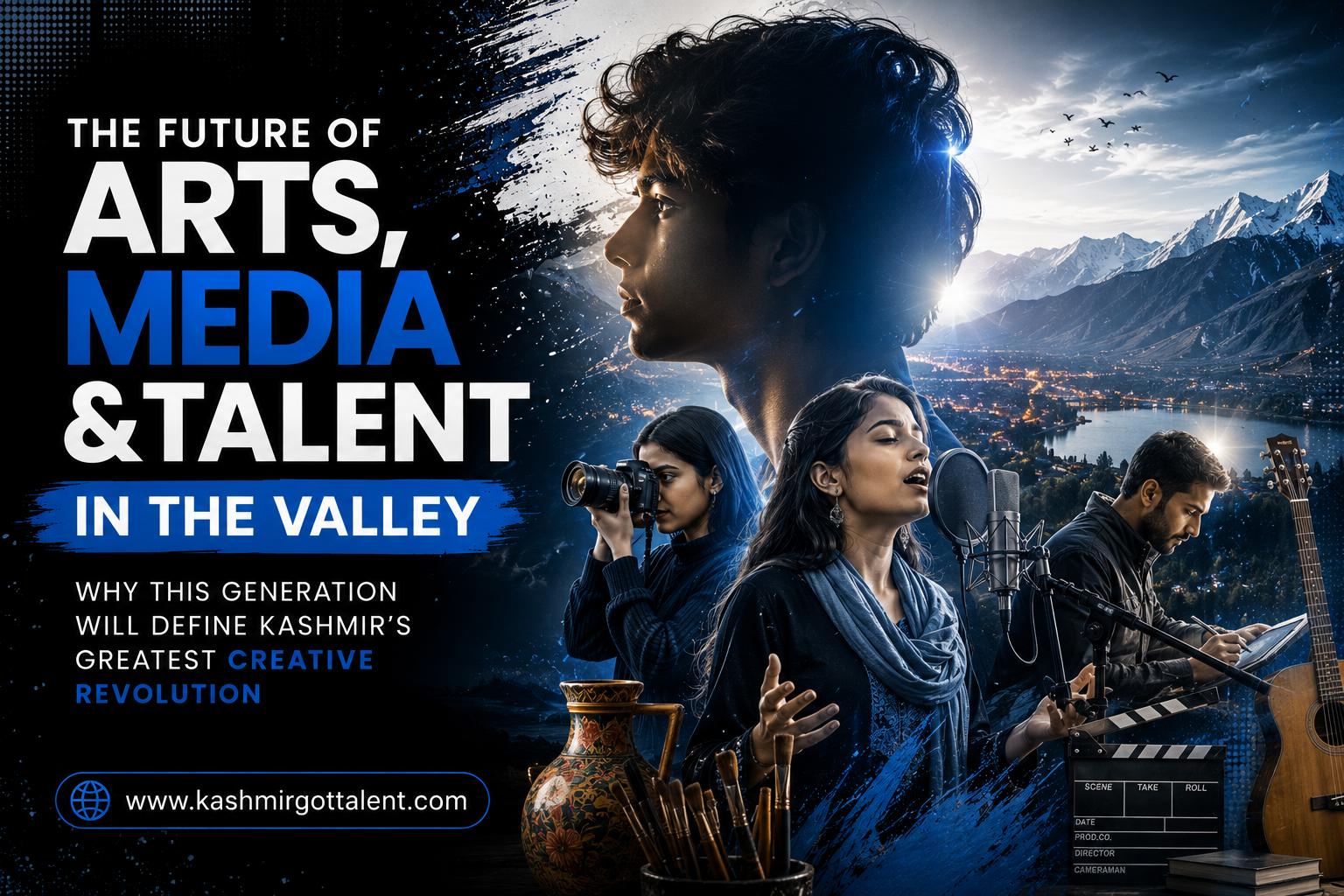
The Future of Arts, Media and Talent in the Valley: Why This Generation Will Define Kashmir’s Greatest Creative Revolution
The Future of Arts, Media and Talent in the Valley The Valley has always been a land of breathtaking beauty, timeless traditions, unforgettable stories, and extraordinary artistic expression. For centuries, its culture has inspired poets, musicians, painters, craftsmen, storytellers, and visionaries. Today, however, something even more powerful is unfolding. A new creative revolution is taking shape. Young artists are no longer waiting for opportunities. They are creating them. Filmmakers are telling authentic stories. Musicians are blending traditional sounds with modern production. Photographers are showcasing hidden beauty to global audiences. Content creators are building communities that cross borders. Entrepreneurs are transforming creative passions into sustainable businesses. The future of arts, media, and talent in the Valley is no longer a distant dream. It is happening now. The question is no longer whether the Valley has talent. The real question is whether the world is ready to witness it. A new era has begun Technology has completely changed how creative people build careers. Years ago, artists depended on television networks, publishers, production houses, galleries, or talent agencies to gain recognition. Today, one inspiring video, one powerful song, one remarkable painting, one meaningful documentary, or one unforgettable performance can reach millions of people across the globe within hours. This transformation has removed many barriers that once limited creative minds. Talent now travels faster than geography. Creativity now speaks louder than location. Originality now matters more than expensive equipment. The Valley possesses everything needed to become one of the world’s emerging creative hubs. Why the Valley has unlimited creative potential Every successful creative industry is built upon authentic stories. The Valley offers an endless collection of stories waiting to be shared. Its culture is rich. Its traditions remain alive. Its languages carry generations of wisdom. Its landscapes inspire filmmakers from around the world. Its festivals celebrate heritage. Its people possess resilience that deserves global recognition. These are not ordinary advantages. They are priceless creative assets. While many regions spend years trying to build cultural identity, the Valley already owns one of the richest identities in the world. The next step is sharing it with confidence. The rise of digital creators Social media has become more than entertainment. It has become a powerful career platform. Content creators now educate, inspire, entertain, promote businesses, preserve traditions, and influence millions of people. Whether someone enjoys photography, filmmaking, cooking, fashion, travel, comedy, education, technology, history, music, or storytelling, there is an audience searching for valuable content. The future belongs to creators who remain authentic. Audiences are becoming increasingly attracted to genuine stories rather than artificial perfection. People want honesty. People want emotions. People want creators who represent real communities. The Valley has thousands of such voices waiting to be discovered. Arts are becoming a powerful economic force Creative industries are no longer considered hobbies. Across the world, they generate billions in economic activity. Artists sell their work internationally. Musicians earn through streaming platforms. Writers publish digital books. Designers work remotely for global brands. Animators collaborate with international studios. Video editors build successful freelance businesses. Photographers license images worldwide. Content creators establish profitable personal brands. The Valley has the opportunity to participate in this growing global economy. Creativity is becoming one of the strongest career opportunities of the modern generation. Media is evolving faster than ever Traditional media remains important. However, digital media has expanded opportunities beyond imagination. Independent journalism. Documentary filmmaking. Podcasting. YouTube channels. Educational platforms. Online magazines. Live streaming. Virtual events. Digital storytelling. Every one of these sectors is creating new careers. Young people no longer need permission to begin. They simply need commitment, consistency, and continuous learning. The importance of preserving culture through creativity Modernization should never replace identity. Instead, creativity should preserve heritage while presenting it in modern ways. Traditional music can inspire new compositions. Ancient architecture can inspire filmmakers. Local fashion can influence international designers. Historic stories can become bestselling books. Folklore can become animated films. Local cuisine can become global culinary content. Every generation has a responsibility to preserve its culture. Today’s creators have the unique ability to preserve it digitally for future generations. Education will shape tomorrow’s creative leaders Talent alone is rarely enough. Learning transforms potential into excellence. Future artists must continuously improve their skills. Creative education now includes: Creative writing Digital filmmaking Graphic design Animation Artificial intelligence tools Photography Music production Marketing Brand building Public speaking Entrepreneurship Business management Communication The creators who combine artistic talent with professional knowledge will become tomorrow’s industry leaders. The global audience is waiting The internet has erased geographical boundaries. A talented artist from the Valley can inspire someone in London. A musician can gain listeners in New York. A filmmaker can win international awards. A photographer can collaborate with global magazines. A designer can work with international companies. A storyteller can build a worldwide audience. Success no longer depends on where someone lives. It depends on what they create. Challenges should become motivation Every creative journey faces obstacles. Limited resources. Financial uncertainty. Competition. Self-doubt. Lack of exposure. Criticism. These challenges are real. But every globally recognized creator has faced similar struggles. Persistence often separates successful creators from forgotten talent. The Valley has already produced resilient generations. That same resilience can fuel its creative future. Supporting local talent creates stronger communities When communities celebrate local creators, everyone benefits. Artists gain confidence. Businesses discover new opportunities. Young people find inspiration. Tourism grows. Culture becomes stronger. Employment increases. Communities become more connected. Supporting local creativity is an investment in the future. Every shared artwork. Every viewed video. Every purchased handmade product. Every concert attended. Every independent film watched. Every local exhibition visited. These small actions create powerful long-term change. The role of innovation The future belongs to creators who embrace innovation without abandoning authenticity. Artificial intelligence. Virtual reality. Augmented reality. Interactive storytelling. Digital exhibitions. Immersive experiences. Creative technology. These tools should enhance creativity rather than replace human imagination. Technology changes. Authentic storytelling remains timeless. Young talent must stop waiting Too many gifted individuals delay their dreams
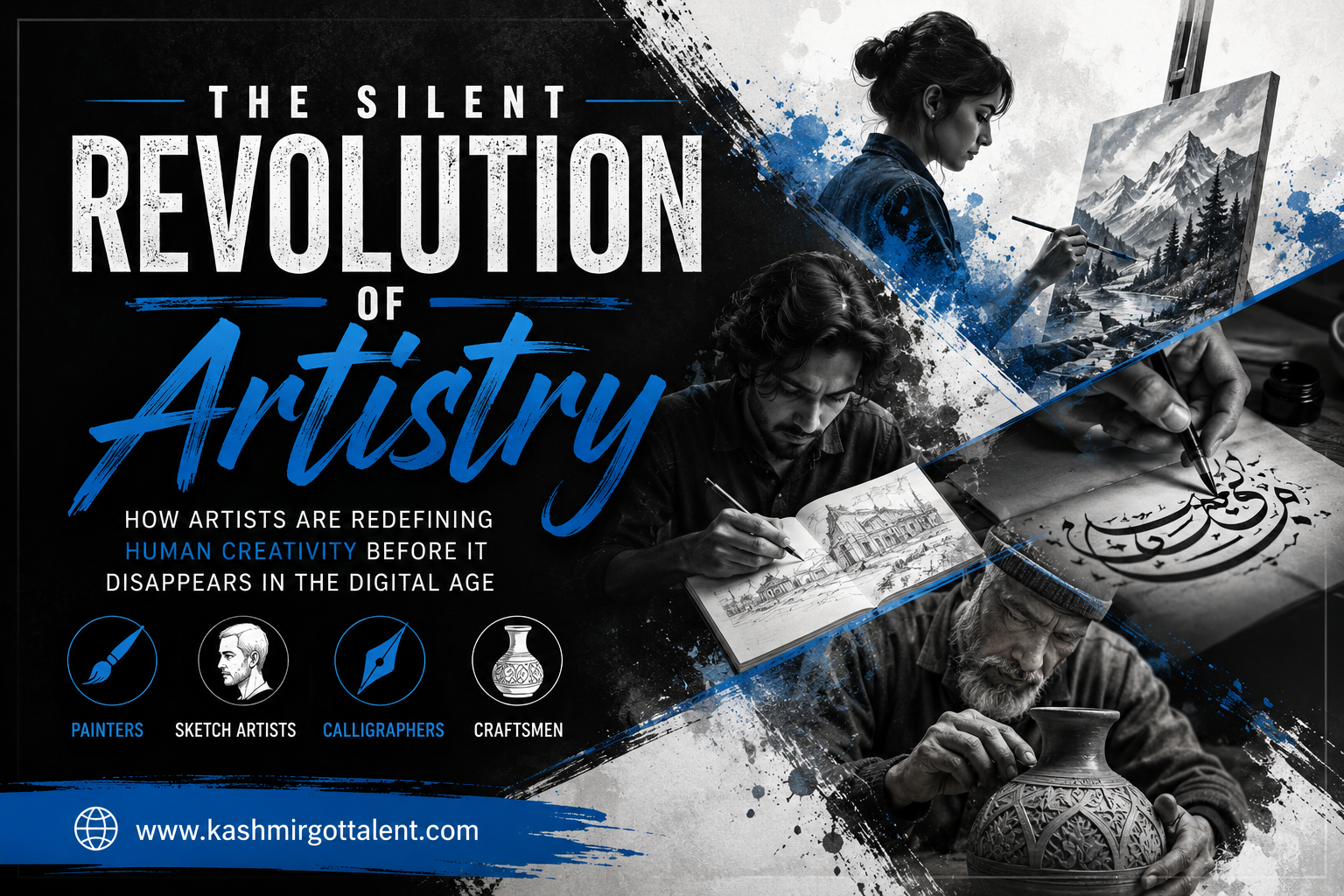
The Silent Revolution of Artistry: How Painters, Sketch Artists, Calligraphers, and Craftsmen Are Redefining Human Creativity Before It Disappears in the Digital Age
The Forgotten Power of Human Hands: Why Artistry Is No Longer Optional in a Machine-Driven World We are living in a time where speed is valued more than soul, and automation is replacing intention. Yet in the middle of this transformation, a quiet revolution is happening—led by painters, sketch artists, calligraphers, and craftsmen who are preserving something machines can never replicate: human expression through touch, patience, and imperfection. This is not just art. This is survival of identity. Every brushstroke, every carved detail, every inked curve carries something deeper than aesthetics—it carries memory, culture, emotion, and discipline. And in a world overflowing with digital content, these handmade expressions are becoming rare, powerful, and urgently valuable. Why Artistry Matters More Now Than Ever Before Artistry is no longer confined to galleries or exhibitions. It is becoming a global language of emotional intelligence. Painters are not just creating visuals—they are translating emotion into color. Sketch artists are documenting reality in its rawest form, untouched by filters or algorithms. Calligraphers are preserving the sacred discipline of language as visual rhythm. Craftsmen are rebuilding the meaning of durability in a disposable world. The urgency is real: when everything becomes automated, authenticity becomes luxury. And that luxury is disappearing faster than we realize. Painters: Interpreting Emotion Through Color Before Words Fail Painting is not decoration. It is interpretation. A painter sees what most people feel but cannot express. Each stroke becomes a decision, each shade becomes a psychological imprint. In modern society, where attention spans are shrinking, painting forces the viewer to slow down and feel again. This is why original paintings are gaining global demand—not because they are beautiful, but because they are emotionally irreplaceable. Sketch Artists: The Truth-Tellers of Visual Reality Sketching is the most honest form of visual storytelling. There is no distraction of color, no digital enhancement, no artificial correction. Only truth. Sketch artists capture life in motion—faces, architecture, emotions, and moments that exist for only seconds. In a world where images are heavily edited, sketches bring back trust in what is seen. Their work is not just art. It is documentation of reality before it changes or disappears. Calligraphy: The Discipline of Beauty in Every Stroke Calligraphy is where language becomes art and discipline becomes elegance. Every stroke in calligraphy demands control, patience, and repetition. Unlike typing, where words are instant, calligraphy requires intention. It slows down thought, forcing the mind to align with the hand. This is why calligraphy is experiencing a global revival. It represents resistance against speed culture. It is mindfulness made visible. In an age of digital fonts, handwritten beauty has become a form of luxury communication. Craftsmen: The Builders of Meaningful Objects in a Disposable Era Craftsmanship is not just skill—it is responsibility. Craftsmen create objects designed to last, not to be replaced. Whether it is woodwork, metalwork, pottery, or fabric art, craftsmanship connects humanity back to material reality. Every crafted object carries time inside it. Time spent shaping, refining, correcting, and perfecting. In contrast to mass production, craftsmanship reminds us that value increases with effort, not speed. This is why handcrafted goods are becoming global symbols of authenticity and status. The Urgent Truth: Why Artistry Must Be Preserved Now We are approaching a critical turning point where creative identity risks being replaced by automated production systems. While technology enhances efficiency, it cannot replicate emotional depth, cultural nuance, or human imperfection. If artistry disappears, we lose more than skills—we lose perspective. This is not a nostalgic concern. It is a cultural emergency. Supporting painters, sketch artists, calligraphers, and craftsmen is no longer optional appreciation. It is active preservation of human intelligence. How to Take Action and Support Artistry Today Preserving artistry is not passive. It requires conscious decisions: Choose handmade over mass-produced when possible Support independent artists and local craftsmen Invest in original artworks instead of replicas Encourage children and students to practice drawing and writing by hand Value time spent creating, not just consuming Every small decision contributes to keeping human creativity alive. Final Thought: The Future Will Be Defined by What We Refuse to Forget Technology will continue to evolve. Automation will continue to expand. But the human need for expression will never disappear. Painters, sketch artists, calligraphers, and craftsmen are not just creators of beauty—they are guardians of identity in a rapidly digitizing world. The question is no longer whether artistry matters. The question is whether we will still have it tomorrow.
Breakthrough Generation: How Innovation Talent Among Tech Creators, Designers, and Young Inventors Is Reshaping the Future Before It’s Too Late to Catch Up
The world is quietly undergoing a transformation that most people will only recognize when it is already complete. A new wave of innovation talent is rising from unexpected places: bedrooms turned into coding labs, small design studios powered by imagination, and young inventors building prototypes before they even finish school. These are not future possibilities. They are present realities rewriting industries faster than institutions can adapt. What separates this generation of tech creators, designers, and young inventors is not just skill, but urgency-driven creativity. They are not waiting for permission. They are not waiting for traditional pathways. They are building, launching, iterating, and disrupting in real time. Every app coded in a dorm room, every sustainable product sketched on a digital tablet, every prototype assembled from limited resources carries one shared message: innovation no longer belongs to corporations alone. The global economy is shifting toward a creator-led innovation model. In this model, ideas are currency, execution is power, and adaptability determines survival. Those who understand this shift are already building the future. Those who ignore it risk becoming spectators in a world they once tried to lead. Tech creators today are not just developers. They are problem-solvers who identify gaps in healthcare, education, finance, and communication, then build tools to close them. Designers are no longer just visual artists. They are behavioral architects shaping how humans interact with technology and information. Young inventors are no longer “too early” in their journey. They are often the most fearless contributors to breakthrough ideas because they are not constrained by outdated assumptions. Yet the real challenge is not talent. The real challenge is recognition, access, and acceleration. Millions of innovative minds remain unseen because systems still prioritize credentials over capability. This disconnect is creating a silent gap between innovation potential and innovation opportunity. The urgency cannot be ignored. Artificial intelligence, automation, and digital ecosystems are accelerating at a pace that rewards experimentation and punishes delay. The window to build relevance is shrinking. Skills alone are no longer enough. Visibility, adaptability, and continuous innovation have become essential survival traits. For young innovators, the path forward is clear but demanding. Learn continuously, build relentlessly, and share openly. Every project, no matter how small, becomes a signal to the world about your direction. For educators and institutions, the responsibility is equally urgent: create environments where experimentation is encouraged, failure is normalized, and creativity is measured alongside academic performance. For industries, the message is unavoidable. The next global breakthrough will not necessarily come from a boardroom. It will come from a creator who was once underestimated, a designer who was once overlooked, or a young inventor who was once told they were too early. The future belongs to those who act before permission is granted. Innovation is no longer a department. It is a mindset, a culture, and a survival strategy. If you are building, designing, or inventing today, you are not early. You are exactly on time for a future that is already forming.
The Hidden Power of Acting & Drama: How Storytelling Can Transform Your Voice, Confidence, and Future in a Changing World
Introduction: Why Acting & Drama Matter More Than Ever In a world overwhelmed by digital noise, fast content, and shrinking attention spans, one human skill is rising above everything else: the ability to tell powerful stories. Acting and drama are no longer limited to stage theaters or film sets. They have become essential tools for communication, influence, leadership, education, and personal transformation. Whether you are a student, professional, content creator, or entrepreneur, understanding acting and drama means understanding how to move people emotionally, how to hold attention, and how to make your message unforgettable. This is not just an art form. It is a life skill that shapes careers, identities, and global influence. The Real Meaning of Acting & Drama Beyond the Stage Acting is often misunderstood as pretending. In reality, acting is the disciplined study of human behavior, emotion, and truth. Drama is the structured expression of conflict, emotion, and transformation. Together, they form a system of storytelling that reflects real life more accurately than most conversations do. At its core, acting teaches you: Emotional intelligence and awareness Voice control and body language mastery Deep empathy and perspective-taking Authentic communication under pressure Drama teaches you: How stories are structured and remembered How conflict creates engagement How tension and resolution shape human attention How meaning is delivered through performance Why Acting Skills Are Becoming a Global Advantage in 2026 and Beyond The modern world is driven by visibility. Social media, online learning, video communication, and AI-generated content have changed how people interact. But one thing has not changed: humans respond to emotion. People do not remember information. They remember how something made them feel. This is where acting and drama become powerful tools for: Public speaking and presentations Social media influence and content creation Sales, marketing, and brand storytelling Leadership and team communication Interviews and professional growth The ability to express emotion with clarity is now a competitive advantage in nearly every field. How Acting & Drama Build Confidence From the Inside Out One of the most powerful transformations acting offers is confidence. But this confidence is not artificial. It is built through repeated exposure to emotional expression, vulnerability, and structured storytelling. When you learn acting: You stop fearing judgment You learn to control nervous energy You develop presence in any room You become comfortable being seen and heard Drama exercises train your mind to think quickly, react authentically, and adapt to unexpected situations. This builds resilience not just on stage, but in real life conversations and challenges. The Emotional Intelligence Advantage No One Talks About Acting requires you to step into another person’s life. This develops emotional intelligence at a level that traditional education rarely reaches. You begin to understand: Why people behave the way they do How emotions influence decisions How silence can communicate more than words How conflict can be transformed into connection This is why many top leaders, speakers, and influencers unknowingly use acting principles in their communication style. Drama as a Tool for Modern Communication and Influence Drama is not exaggeration. It is structure. It is timing. It is emotional design. Every powerful speech, viral video, or memorable advertisement uses dramatic structure: A hook that creates curiosity A conflict that builds tension A resolution that delivers meaning When applied correctly, drama helps you: Capture attention in seconds Maintain engagement longer Deliver messages that people remember and share Create emotional impact instead of informational overload How to Start Learning Acting & Drama Today You do not need to be in a theater or film school to begin. You only need consistent practice and awareness. Start with these steps: Practice reading aloud with emotion and variation Observe people and study real human behavior Record yourself speaking and analyze expression Practice improvisation in daily conversations Learn storytelling structure from real-life experiences The goal is not perfection. The goal is awareness and emotional control. The Future Belongs to Storytellers As artificial intelligence grows, technical skills alone will not be enough. Machines can generate data, write scripts, and analyze patterns. But they cannot truly replicate human emotional depth. This is why acting and drama are becoming future-proof skills. The people who will stand out are not those who speak the most, but those who can make others feel the most. Conclusion: Your Voice Is Your Power Acting and drama are not just artistic disciplines. They are tools for transformation. They reshape how you speak, think, connect, and influence the world around you. In a competitive global environment, your ability to tell a story with emotion may define your opportunities more than your qualifications. If you master this skill, you do not just perform stories. You become someone whose presence is a story itself.
Poetry & Storytelling: Heartbeats of the Valley That Could Disappear Before You Notice
The Valley Does Not Speak Loudly — It Whispers Through Poetry and Memory There are places in the world where history does not sit inside books. It breathes through wind, through old pathways, through voices that never learned to become headlines. The valley is one of those places. Here, storytelling is not entertainment. It is survival. Every poem carries the weight of generations who never had microphones. Every story is a bridge between what was lost and what still refuses to die. And yet, these voices are slowly fading—not because they are unimportant, but because the world is moving too fast to listen. This is not just culture. This is living memory at risk. Why Poetry and Storytelling Still Matter in a Digital-First World We live in an era where attention is measured in seconds. But poetry does not work in seconds. It works in silence, reflection, and emotional depth. In the valley, poetry is not written to impress. It is written to remember. It remembers love that never got closure. It remembers displacement that never made it to textbooks. It remembers homes that exist only in imagination now. Storytelling, in its rawest form, is not content. It is identity. And when identity is not preserved, it does not vanish loudly. It disappears quietly. The Heartbeats Hidden Inside Every Local Story Every valley has its rhythm. But not everyone hears it. The rhythm exists in: The grandmother who still tells stories in a language no longer taught in schools The farmer who knows land not by maps, but by memory The poet who writes in metaphors because truth is too heavy to say directly The children who inherit stories but not always the time to continue them These are not just characters. They are carriers of cultural DNA. And every story they tell is a heartbeat resisting erasure. The Silent Crisis: When Stories Stop Being Told The greatest danger to storytelling is not censorship. It is forgetting. When younger generations stop listening, when oral traditions are replaced by short-form distraction, when cultural pride is replaced by digital noise, something irreversible begins to happen. A valley does not lose its identity in one generation. It loses it slowly, when storytelling becomes optional instead of essential. And by the time people notice, the storytellers are already gone. Why the World Needs the Valley’s Voice More Than Ever In a world driven by artificial intelligence, automation, and global sameness, local stories are the last proof that humanity is still diverse. The valley teaches something modern systems often forget: Emotions cannot be optimized. Memories cannot be standardized. Stories cannot be mass-produced without losing their soul. This is why preserving poetry and storytelling is not cultural nostalgia. It is cultural necessity. What Must Be Done Now: Turning Memory Into Action Preservation does not happen by admiration alone. It requires action. Here is what truly matters right now: Record elders before their stories become silence Document oral poetry before language shifts erase nuance Encourage schools to include local storytelling traditions Support writers who translate lived experience into literature Build digital archives that protect cultural narratives, not dilute them If storytelling dies, culture becomes history without emotion. If storytelling survives, culture becomes future with meaning. The Emotional Truth We Keep Avoiding We often assume culture is permanent. It is not. It survives only as long as someone is willing to remember it, repeat it, and retell it in their own voice. The valley is not asking for attention. It is asking not to be forgotten. And perhaps the most urgent question is not what stories are being told today, but: Who will still be able to tell them tomorrow? Conclusion: The Valley Lives as Long as Its Stories Do Poetry is not decoration. Storytelling is not tradition alone. They are survival tools of identity. As long as there is someone willing to listen, the valley continues to breathe. But silence is never neutral. It always takes something away. The choice is simple but urgent: Preserve the heartbeat, or witness the silence.
Why Dance Is the Only Language That Speaks What Words Cannot: The Hidden Power of Human Emotion in Motion
Introduction: When Words Fail, Movement Begins In a world overwhelmed by noise, opinions, and constant communication, something deeply human is being forgotten. People are speaking more than ever, yet feeling less understood than before. In this silence between conversations, one truth remains powerful and undeniable: dance is not entertainment alone, it is communication in its purest emotional form. Across cultures, generations, and borders, dance continues to exist as a universal language of emotion. It does not require translation. It does not depend on literacy. It does not need permission. It simply speaks, and the body becomes the storyteller. This is not just art. This is survival of expression in its most honest form. The Silent Language the World Already Understands Before humans wrote words, they moved. Rhythm was the first conversation. The heartbeat, the breath, the step—these were early forms of communication long before language structured itself into sentences. Dance carries emotional intelligence that spoken language often fails to deliver. Joy, grief, love, rage, freedom, and even spiritual connection can be expressed through motion in ways that feel instinctively understood. A single movement can carry what paragraphs cannot explain. That is why a traditional cultural dance in one corner of the world can still move a stranger in another without any explanation. Emotion does not need translation. It needs expression. Why Dance Connects Every Human Being The power of dance lies in its universality. It bypasses intellectual barriers and speaks directly to human instinct. Every culture has dance because every culture has emotion. In celebration, people dance. In mourning, people move differently. In love, the body expresses what words hesitate to say. In resistance, movement becomes protest. This is not coincidence. This is biology and psychology combined. Movement activates emotional memory in the brain, making dance one of the most powerful non-verbal communication systems known to humanity. In a disconnected digital world, this ancient truth becomes more urgent than ever. The Emotional Psychology Behind Movement Modern neuroscience reveals something extraordinary: the brain does not separate emotion and movement as strictly as we assume. When people dance: Stress hormones decrease Emotional expression increases Memory and feeling become linked Social connection strengthens This is why dance feels healing. It allows suppressed emotions to exit the body safely. It transforms internal pressure into external release. When people cannot say what they feel, their body begins to speak on its own. Ignoring that expression often leads to emotional stagnation. Listening to it leads to emotional clarity. Dance in the Modern World: A Forgotten Necessity Despite being deeply natural, dance is increasingly treated as optional. Entertainment. A hobby. A performance. But removing dance from human life is like removing vocabulary from language. Expression becomes incomplete. In schools, workplaces, and even homes, structured life has replaced expressive life. Yet stress, anxiety, and emotional disconnection continue to rise globally. This is not a coincidence. It is a consequence of silencing the body’s language. The urgency is real: societies that forget how to express emotion physically slowly forget how to understand emotion at all. Why the World Needs Dance More Than Ever We are living in an era of emotional overload but expressive limitation. People feel deeply but communicate superficially. Dance restores balance. It teaches: Emotional honesty without judgment Presence without distraction Connection without language barriers Freedom without explanation In moments of uncertainty, movement becomes grounding. In moments of isolation, it becomes connection. In moments of emotional pressure, it becomes release. The world does not just need more communication. It needs more expression that is real. Action Step: Reconnecting With Your Body’s Language You do not need training, talent, or stage performance to begin. Start with something simple: Move without structure for a few minutes daily Let music guide your emotions instead of controlling them Observe how your body reacts to different feelings Allow yourself to express without judgment or performance This is not about becoming a dancer. It is about remembering that you already are one in your most natural form. Conclusion: The Truth We Keep Forgetting Dance is not separate from life. It is life expressing itself. Every step, every rhythm, every spontaneous movement carries meaning deeper than words. In a world struggling with misunderstanding and emotional distance, dance remains one of the last pure forms of truth. If language divides, dance unites. If words fail, movement reveals. If silence grows heavy, the body speaks. And it is speaking constantly. The only question is whether we are willing to listen.
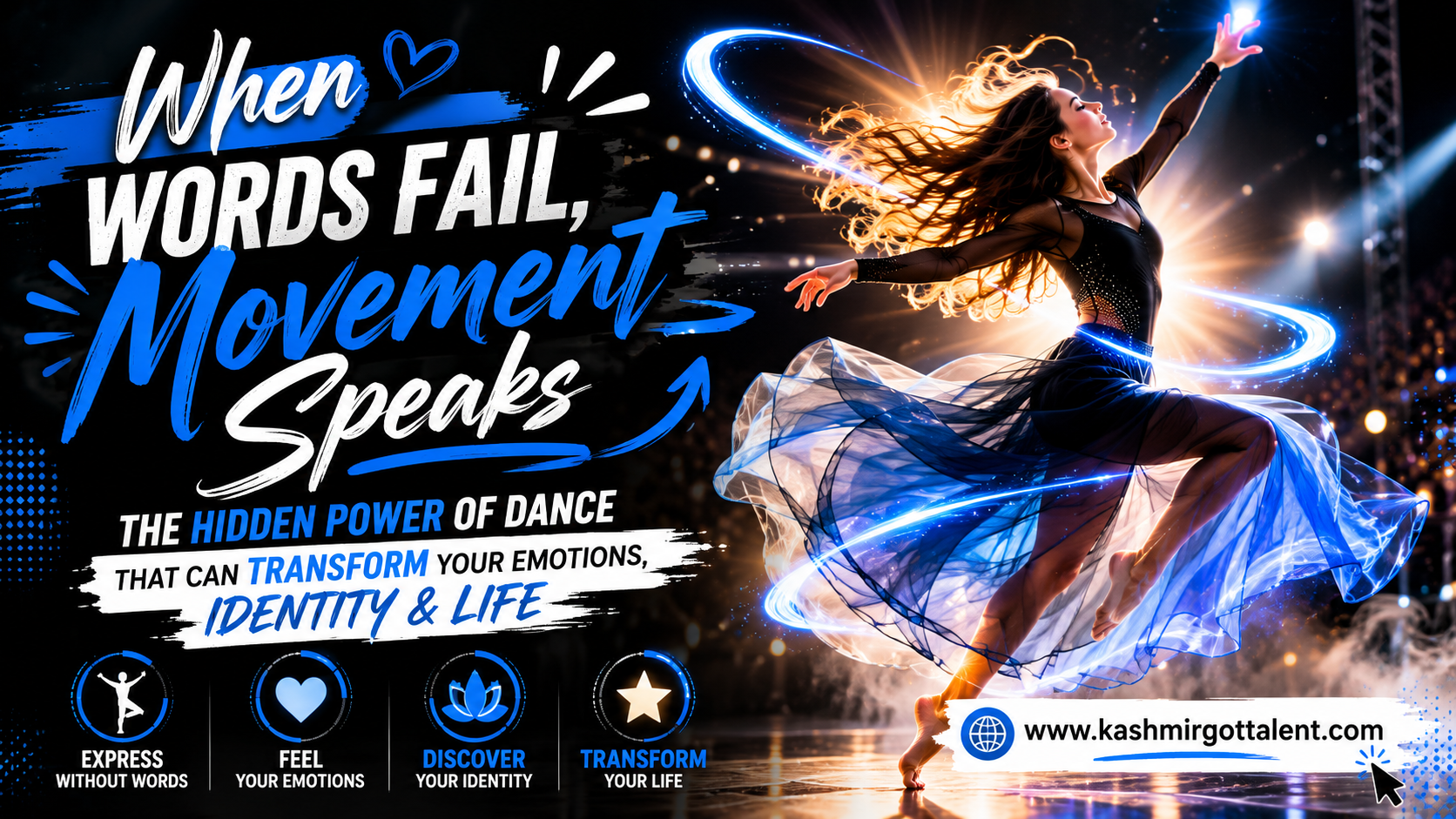
When Words Fail, Movement Speaks: The Hidden Power of Dance That Can Transform Your Emotions, Identity, and Life
Introduction: The Language You Were Never Taught, But Always Understood There are moments in life when language collapses. When words feel too small, too fragile, or too late. In those moments, something older than speech takes over: movement. Dance is not just performance. It is not just art. It is emotional translation in motion. It is the body speaking what the mind cannot organize into sentences. Across cultures, generations, and histories, dance has remained one truth: humans move when they feel deeply. In a world overloaded with noise, dance remains a silent revolution. Why Dance Is More Than Art: It Is Emotional Intelligence in Motion Most people misunderstand dance as entertainment. In reality, it is one of the highest forms of emotional intelligence expression. When a person dances, they are not just moving limbs. They are processing grief, joy, anger, love, memory, and identity. Science supports this. Movement activates emotional regulation centers in the brain, releasing stress, reducing anxiety, and improving psychological resilience. But beyond science, there is something more human: dance allows you to feel without explanation. You don’t need permission to dance. You don’t need translation. You only need presence. The Psychological Truth Behind Dance: Why Your Body Remembers What Your Mind Forgets Trauma experts and psychologists have long observed that the body stores emotional memory. This is why some feelings cannot be spoken but can be physically released. Dance becomes a form of emotional release therapy without needing language. A shoulder drop can represent letting go. A sudden spin can reflect freedom. A slow movement can mirror healing. This is not abstract philosophy. It is lived human experience. When words fail, the body remembers how to continue the story. Dance Across Cultures: A Universal Language That Predates Civilization Long before written language, humans communicated through movement. Ritual dances were used for healing, celebration, war preparation, spiritual connection, and storytelling. From classical traditions to street expressions, dance has always carried cultural DNA: In some cultures, it is prayer in motion In others, it is resistance and identity And in many, it is pure celebration of existence Despite differences, the message remains identical: “I am alive, and I feel deeply.” Why Modern Life Is Forcing People Back Into Dance We live in an age of constant digital communication. Messages are typed faster than emotions are processed. Yet emotional burnout is rising. This is where dance is returning—not as performance, but as survival. People are rediscovering movement because it requires no approval, no filter, no algorithm. It is raw, immediate, and real. In a world obsessed with how we look online, dance reminds us how it feels to be human offline. The Confidence Shift: How Dance Changes Identity From Within One of the most underestimated effects of dance is identity transformation. When a person begins to move freely, something changes internally: Self-consciousness decreases Body awareness increases Emotional repression loosens Confidence becomes physical, not theoretical Dance does not teach confidence through theory. It builds it through repetition, rhythm, and embodiment. You don’t “learn” confidence in dance. You become it. The Emotional Urgency: Why You Should Not Delay Expression There is a dangerous misconception that emotional expression can wait. It cannot. Unprocessed emotion does not disappear. It accumulates. It becomes stress, fatigue, anxiety, and disconnection from self. Dance offers an immediate outlet. Not tomorrow. Not later. Now. Even a few minutes of movement can interrupt emotional stagnation and reset internal balance. The longer expression is delayed, the heavier silence becomes. How to Begin: You Do Not Need Skill, Only Honesty You do not need training to begin. You do not need rhythm perfection. You do not need an audience. You only need willingness. Start small: Move when music affects you Allow your body to respond without judgment Stop trying to “look good” and start trying to “feel true” Let movement follow emotion, not choreography The goal is not performance. The goal is release. Conclusion: Dance Is Not Something You Do, It Is Something You Allow At its deepest level, dance is not an activity. It is permission. Permission to feel without explanation.Permission to move without judgment.Permission to exist without restriction. When words fail, dance does not replace them. It transcends them. And in that silence of movement, something powerful happens: you finally hear yourself again.