Introduction: The Language You Were Never Taught, But Always Understood
There are moments in life when language collapses. When words feel too small, too fragile, or too late. In those moments, something older than speech takes over: movement.
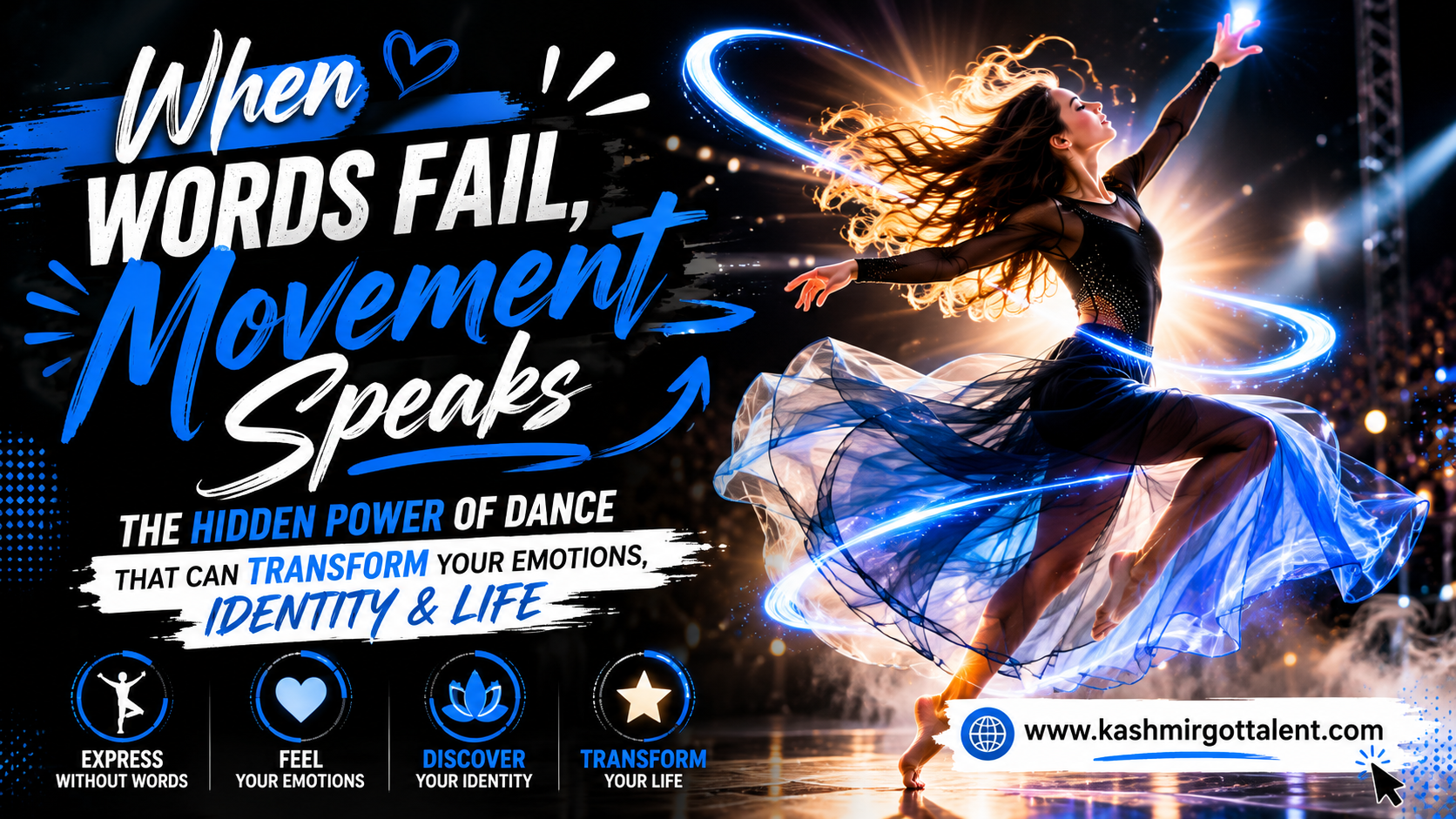
Dance is not just performance. It is not just art. It is emotional translation in motion. It is the body speaking what the mind cannot organize into sentences. Across cultures, generations, and histories, dance has remained one truth: humans move when they feel deeply.
In a world overloaded with noise, dance remains a silent revolution.
Why Dance Is More Than Art: It Is Emotional Intelligence in Motion
Most people misunderstand dance as entertainment. In reality, it is one of the highest forms of emotional intelligence expression.
When a person dances, they are not just moving limbs. They are processing grief, joy, anger, love, memory, and identity.
Science supports this. Movement activates emotional regulation centers in the brain, releasing stress, reducing anxiety, and improving psychological resilience. But beyond science, there is something more human: dance allows you to feel without explanation.
You don’t need permission to dance. You don’t need translation. You only need presence.
The Psychological Truth Behind Dance: Why Your Body Remembers What Your Mind Forgets
Trauma experts and psychologists have long observed that the body stores emotional memory. This is why some feelings cannot be spoken but can be physically released.
Dance becomes a form of emotional release therapy without needing language. A shoulder drop can represent letting go. A sudden spin can reflect freedom. A slow movement can mirror healing.
This is not abstract philosophy. It is lived human experience.
When words fail, the body remembers how to continue the story.
Dance Across Cultures: A Universal Language That Predates Civilization
Long before written language, humans communicated through movement. Ritual dances were used for healing, celebration, war preparation, spiritual connection, and storytelling.
From classical traditions to street expressions, dance has always carried cultural DNA:
- In some cultures, it is prayer in motion
- In others, it is resistance and identity
- And in many, it is pure celebration of existence
Despite differences, the message remains identical: “I am alive, and I feel deeply.”
Why Modern Life Is Forcing People Back Into Dance
We live in an age of constant digital communication. Messages are typed faster than emotions are processed. Yet emotional burnout is rising.
This is where dance is returning—not as performance, but as survival.
People are rediscovering movement because it requires no approval, no filter, no algorithm. It is raw, immediate, and real.
In a world obsessed with how we look online, dance reminds us how it feels to be human offline.
The Confidence Shift: How Dance Changes Identity From Within
One of the most underestimated effects of dance is identity transformation.
When a person begins to move freely, something changes internally:
- Self-consciousness decreases
- Body awareness increases
- Emotional repression loosens
- Confidence becomes physical, not theoretical
Dance does not teach confidence through theory. It builds it through repetition, rhythm, and embodiment.
You don’t “learn” confidence in dance. You become it.
The Emotional Urgency: Why You Should Not Delay Expression
There is a dangerous misconception that emotional expression can wait. It cannot.
Unprocessed emotion does not disappear. It accumulates. It becomes stress, fatigue, anxiety, and disconnection from self.
Dance offers an immediate outlet. Not tomorrow. Not later. Now.
Even a few minutes of movement can interrupt emotional stagnation and reset internal balance.
The longer expression is delayed, the heavier silence becomes.
How to Begin: You Do Not Need Skill, Only Honesty
You do not need training to begin. You do not need rhythm perfection. You do not need an audience.
You only need willingness.
Start small:
- Move when music affects you
- Allow your body to respond without judgment
- Stop trying to “look good” and start trying to “feel true”
- Let movement follow emotion, not choreography
The goal is not performance. The goal is release.
Conclusion: Dance Is Not Something You Do, It Is Something You Allow
At its deepest level, dance is not an activity. It is permission.
Permission to feel without explanation.
Permission to move without judgment.
Permission to exist without restriction.
When words fail, dance does not replace them. It transcends them.
And in that silence of movement, something powerful happens: you finally hear yourself again.