Introduction: Why Singing Is More Than Sound
Singing is often misunderstood as a talent reserved for performers, musicians, or the naturally gifted. In reality, it is one of the most accessible and powerful psychological tools available to every human being. Beyond entertainment, singing directly interacts with the brain’s emotional centers, nervous system, memory pathways, and stress response mechanisms.
Modern neuroscience confirms what ancient cultures already practiced: singing is not just art, it is emotional regulation, mental healing, and cognitive activation in action.
If you have ever felt lighter after singing in the shower, calmer after humming a tune, or emotionally released after belting out a song, that was not coincidence. That was biology responding to sound, rhythm, and breath.
How Singing Rewires the Brain for Emotional Stability
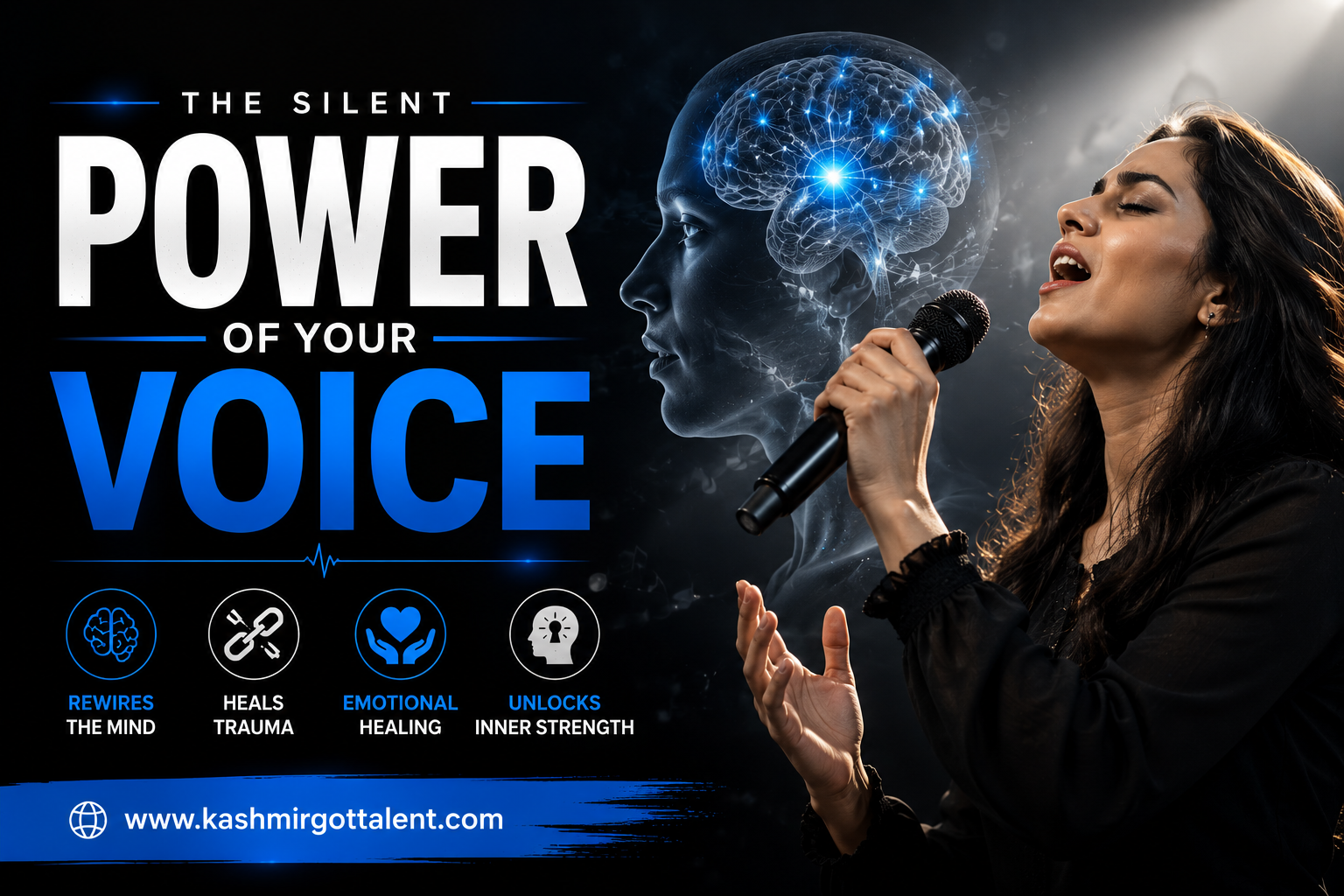
When you sing, multiple regions of the brain activate simultaneously. The auditory cortex processes sound, the limbic system regulates emotion, and the prefrontal cortex manages focus and control. This synchronized activation creates a neurological “reset effect” that helps regulate mood.
Regular singing has been linked to reduced activity in the amygdala, the part of the brain responsible for fear and stress responses. This means singing can literally reduce anxiety levels at a structural brain level.
Over time, consistent vocal expression trains the brain to shift faster from stress states to calm states. This is why singers often appear emotionally expressive yet mentally balanced.
The Psychological Benefits of Singing You Should Not Ignore
Singing is not just emotionally satisfying; it is psychologically transformative.
It reduces stress hormones by influencing cortisol regulation, helping the body transition out of fight-or-flight mode. It also stimulates dopamine release, which is directly tied to pleasure, motivation, and reward.
People who sing regularly report higher emotional resilience. This is because singing acts as a form of emotional discharge, allowing suppressed feelings to move through the body instead of becoming internalized stress.
It also strengthens self-expression. Many individuals struggle to articulate emotions verbally, but singing bypasses cognitive resistance and allows emotional truth to surface naturally.
Singing and Trauma Release: Why Your Voice Holds Emotional Memory
The human voice is closely connected to emotional memory. Trauma is not only stored in thoughts but also in the body and vocal expression. Singing engages breath control, vocal cords, and diaphragmatic movement, which helps release stored emotional tension.
Therapeutic approaches in psychology increasingly use vocalization techniques because sound vibration influences the vagus nerve, a key regulator of emotional stability and recovery.
When a person sings, especially with emotional engagement, the body begins to “unlock” stored tension. This is why many people experience unexpected emotional release while singing alone.
What feels like sadness or tears during singing is often psychological release, not emotional breakdown.
Cognitive Enhancement Through Singing: Sharpening the Mind Naturally
Singing is also a powerful cognitive exercise. It improves memory, attention span, and linguistic processing. Learning lyrics challenges the brain’s working memory, while rhythm enhances pattern recognition skills.
Studies show that singing improves neuroplasticity, meaning the brain becomes more adaptable and efficient in forming new connections.
For aging adults, singing is linked to slower cognitive decline and improved verbal recall. For younger individuals, it strengthens learning capacity and focus.
In simple terms, singing is mental training disguised as emotional expression.
Social and Psychological Confidence: The Hidden Transformation
One of the most overlooked benefits of singing is its impact on confidence. Singing, especially in front of others, reduces social anxiety over time.
The reason is exposure combined with self-expression. The brain learns that vocal expression is safe, even in vulnerable settings.
This gradually reduces fear of judgment and increases self-acceptance. People who sing often develop stronger communication skills because they become more comfortable with their own voice, both literally and metaphorically.
Why You Should Start Singing Now, Not Later
Modern life is filled with silent stress, emotional suppression, and mental overload. Singing acts as a natural counterbalance to this pressure.
You do not need training. You do not need a perfect voice. You only need consistency and willingness.
Even five minutes of daily singing can begin to shift emotional patterns, reduce stress accumulation, and improve psychological resilience.
The longer you delay it, the more emotional tension remains stored in the body without release.
Singing is not a luxury activity. It is a mental hygiene practice.
Conclusion: Your Voice Is a Psychological Instrument
Your voice is not just a communication tool. It is a regulator of emotion, a stabilizer of stress, and a gateway to psychological healing.
Singing brings the mind, body, and emotion into alignment in a way few other activities can.
The real question is not whether singing has benefits. The real question is whether you can afford to ignore something so simple that could fundamentally improve your mental well-being.
The science is clear, the psychology is proven, and the experience is universal.
You were designed to sing. Your mind remembers it even if your life made you forget it.