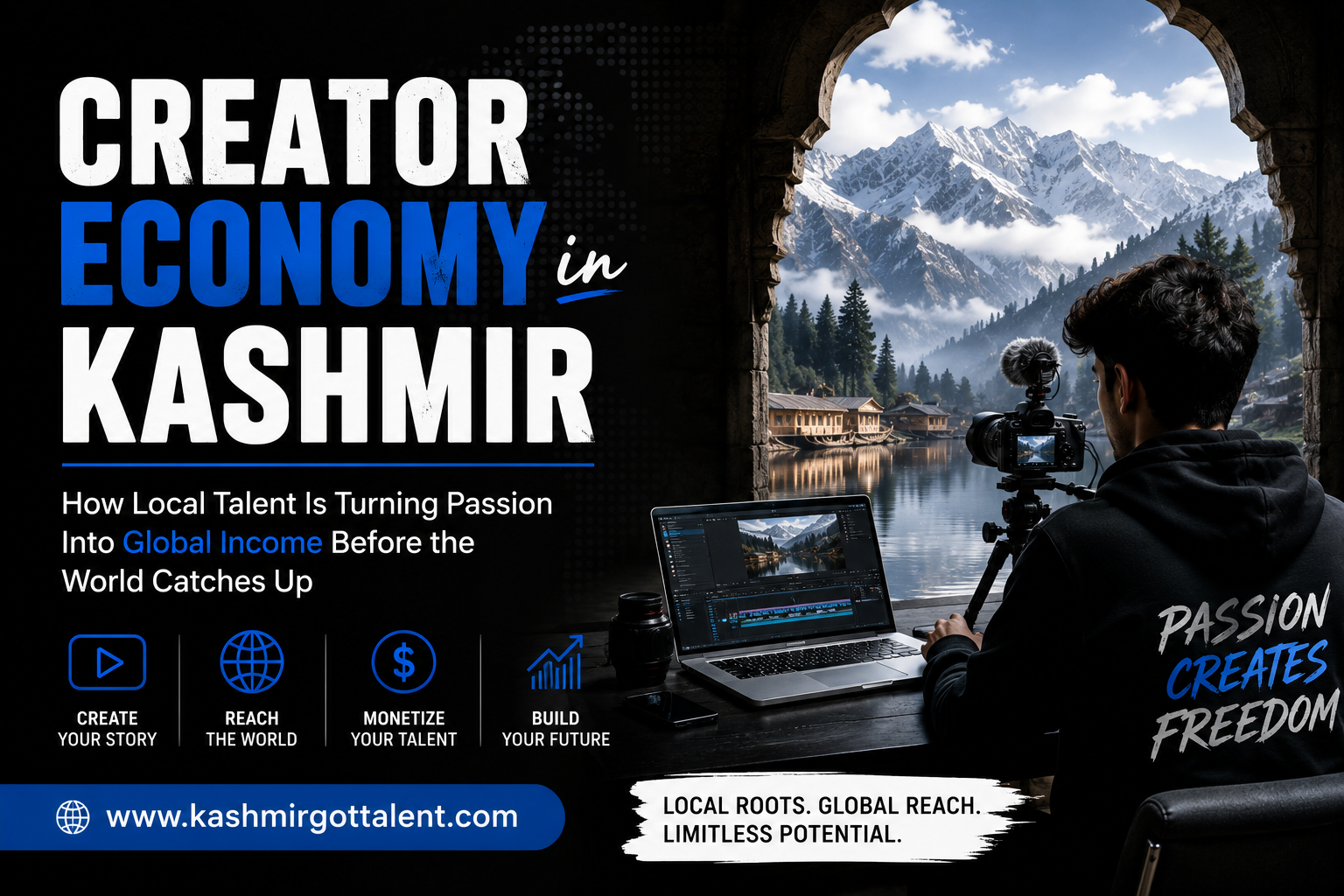
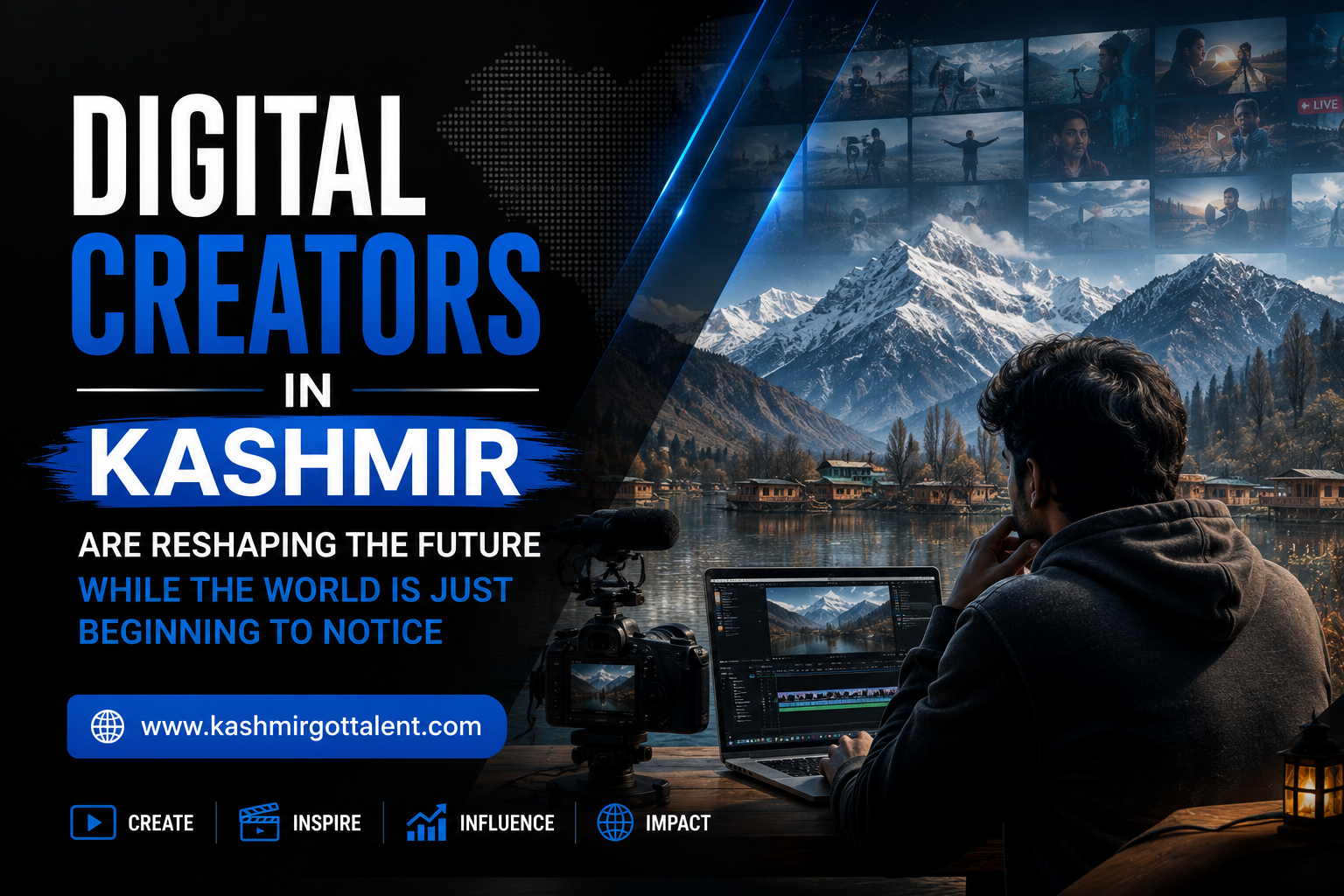
By Kashmir Got Talent
A vision powered by The Furniture Times (TFT), Furniture Industry Search Engine (FISE), FISE LIVE, and the FISE Searchology Inclusion System™
The Biggest Threat to a Great Business May Not Be Competition. It May Be Invisibility.
Some businesses have excellent products but struggle to attract customers. Some artisans produce extraordinary work, yet their creations remain known only within their local communities. Some small manufacturers have the skills, machinery, and experience to serve international markets but rarely receive enquiries beyond their immediate surroundings.
And some talented creators spend years building something valuable without ever receiving the recognition their work deserves.
Why?
Because there is a problem that many entrepreneurs underestimate: the invisible business problem.
A business can exist without being discovered. A product can be exceptional without reaching the right buyer. An artisan can possess remarkable skills without having an audience. A company can operate for years without establishing a meaningful digital identity.
In today’s increasingly connected economy, being good at what you do is important. But being discoverable is becoming equally important.
Think about it. When someone needs a product, supplier, manufacturer, designer, or service provider, where do they begin? They search. They explore. They compare. They look for information that helps them decide whom to trust.
If your business is missing from that discovery journey, you may never get the opportunity to demonstrate your value.
This is the invisible business problem, and it deserves the attention of every entrepreneur, SME, manufacturer, artisan, independent maker, and grassroots creator.
Through the vision of Kashmir Got Talent, alongside The Furniture Times (TFT), Furniture Industry Search Engine (FISE), FISE LIVE, and the FISE Searchology Inclusion System™, a bigger conversation is emerging: how can valuable businesses and talented people become easier to discover in a world where attention and visibility influence opportunity?
The answer begins with a simple principle:
You cannot build opportunities around a business that the right people cannot find.
1. What Is the Invisible Business Problem?
The invisible business problem occurs when a business, creator, or skilled professional has something valuable to offer but lacks sufficient digital visibility, discoverability, or recognition among relevant audiences.
It does not necessarily mean the business has no website, no social media account, or no online presence.
In fact, many businesses are already online.
They publish photographs, upload videos, share promotional posts, create websites, and announce new products. Yet they continue to struggle with enquiries, customer acquisition, and meaningful business connections.
The problem is that simply being online is not the same as being discoverable.
Imagine a furniture manufacturer producing quality wooden furniture. Its workshop is operational, its workers are experienced, and its products are ready for the market. However, an international retailer searching for a suitable supplier cannot easily identify the manufacturer.
The manufacturer exists. The products exist. The capabilities exist.
But the connection does not happen.
Now consider a talented artisan who creates handmade products. Their craftsmanship is excellent, but they have limited digital exposure. Potential customers who would appreciate and purchase those products may never encounter their work.
This is not necessarily a talent problem. It is a visibility problem.
The same situation affects small businesses across different industries.
A business may have:
- Excellent products but limited online discoverability.
- Valuable experience but no clear digital identity.
- Strong production capabilities but little international exposure.
- Unique craftsmanship but insufficient storytelling.
- A website but limited visibility in relevant searches.
- Social media activity but few qualified enquiries.
- Ambition to grow but limited access to industry networks.
These challenges reveal an important distinction: business quality and business visibility are two different things.
Entrepreneurs must work on both.
2. Why Great Businesses Remain Invisible While Competitors Get Attention
It is tempting to assume that the best products automatically attract the most customers.
Unfortunately, markets do not always work that way.
Customers cannot evaluate a business they never discover. Buyers cannot contact a supplier they cannot identify. Potential partners cannot build relationships with companies they do not know exist.
Meanwhile, a competitor with a stronger digital presence may receive more attention, even when both businesses offer comparable products.
This does not necessarily mean the competitor has a better product. It may simply be easier to find, understand, and contact.
Several factors contribute to this situation.
Weak digital identity
Many small businesses do not communicate their identity consistently.
Their business names, descriptions, product information, contact details, and branding may differ across platforms. This makes it harder for people to understand who they are and what they offer.
A strong digital identity helps customers recognize a business and understand its value.
Poor discoverability
A business may publish content without considering how its intended audience searches.
For example, a furniture manufacturer may describe itself using internal company terminology, while buyers search for specific product categories, materials, manufacturing capabilities, or supplier locations.
When business information does not reflect how customers search, relevant audiences may struggle to find it.
Limited storytelling
Businesses often focus exclusively on selling products.
They publish prices, promotional graphics, and product photographs but rarely explain their experience, capabilities, craftsmanship, history, or values.
People need information before they develop confidence in a business.
A compelling story can help customers understand what makes a company different.
Dependence on social media
Social media can help businesses build audiences, but relying on social platforms alone creates limitations.
Content competes for attention, platform algorithms change, and followers do not automatically become customers.
A business needs a broader digital presence that includes discoverable information, useful content, and reliable ways to establish contact.
Limited marketing resources
Large companies may have dedicated teams for branding, advertising, public relations, and digital marketing.
Smaller businesses often have to manage everything themselves.
The result is an uneven digital environment in which talented entrepreneurs may struggle to compete for attention.
The challenge is not simply to encourage more advertising. It is to improve access to meaningful discovery opportunities.
3. Kashmir Got Talent: Making Visibility a Conversation About People, Potential and Opportunity
Talent exists everywhere.
It exists in small workshops, independent studios, local communities, family businesses, manufacturing facilities, and among individuals who have developed extraordinary skills through years of practice.
Yet talent does not always receive the exposure it deserves.
Kashmir Got Talent brings an important human dimension to the conversation about visibility: recognizing talent, highlighting potential, and creating greater opportunities for people whose capabilities may otherwise remain unnoticed.
The world is full of individuals with skills, ideas, creativity, and entrepreneurial ambition. But not everyone has access to the platforms, networks, and resources required to introduce their work to a wider audience.
An artisan may have spent decades developing a traditional craft. A young creator may be experimenting with new designs. An independent entrepreneur may be building a business from limited resources. A small manufacturer may be creating employment opportunities within a community.
Their work deserves the opportunity to be seen and understood.
Visibility is not about making every person famous. It is about helping valuable contributions reach audiences that can appreciate them.
For Kashmir Got Talent, this conversation connects naturally with a larger digital inclusion vision.
Talent should not remain limited by geography. Creativity should not be restricted by marketing budgets. A business or individual should have a meaningful opportunity to communicate their abilities beyond their immediate surroundings.
The world cannot recognize talent that it never gets the opportunity to discover.
4. The Furniture Times: Every Business Has a Story Worth Telling
A business is much more than its products.
Behind every company are people, experiences, decisions, challenges, innovations, and ambitions.
A furniture manufacturer is not simply a supplier of tables, chairs, or sofas. It may represent years of manufacturing experience, investment in production facilities, skilled workers, and a commitment to quality.
An artisan is not simply someone selling handmade products. Their work may represent cultural knowledge, family traditions, specialized skills, and personal dedication.
A small enterprise is not merely another company competing in a crowded market. It may be the result of someone’s determination to build an independent livelihood.
These stories matter.
The Furniture Times (TFT) represents the storytelling dimension of the wider visibility vision.
Its central message is:
TFT tells their story.
The objective is to bring attention to businesses, industry participants, entrepreneurs, makers, innovations, and the people behind them.
Why does storytelling matter?
Because customers do not always make decisions based on product specifications alone. They may also consider a company’s experience, credibility, values, manufacturing approach, and reputation.
A well-presented business story can help establish context and give audiences a better understanding of the organization.
For SMEs and emerging businesses, this can be particularly valuable.
They may not have the advertising budgets of major brands, but they still have experiences, products, achievements, and ideas worth communicating.
The Furniture Times places storytelling at the centre of business visibility because recognition often begins when people understand the story behind a name.
5. FISE: Helping the World Find Businesses That Deserve to Be Discovered
A story needs an audience.
A business profile needs relevant visitors.
A product needs potential customers who are actually looking for it.
This is where the Furniture Industry Search Engine (FISE) enters the picture.
FISE represents the discovery dimension of the broader BAB Group of Companies vision.
Its message is simple:
FISE helps the world find them.
Consider the everyday challenges faced by people searching for furniture businesses.
An international buyer may need a particular furniture manufacturer. A retailer may be looking for suppliers. An interior designer may need a specialized producer. A hospitality company may be searching for furniture partners.
These audiences need useful information to identify potential businesses.
At the same time, manufacturers and suppliers need opportunities to introduce their capabilities to relevant markets.
FISE’s broader vision is to make furniture industry discovery more organized and accessible by bringing business information and industry participants into a connected discovery environment.
This is important because a business should not depend entirely on personal introductions or local recognition to become known.
A manufacturer may have the capacity to serve new markets. A supplier may offer products that meet a buyer’s requirements. A designer may have innovative work that deserves greater exposure.
But those possibilities depend, in part, on whether the relevant people can discover one another.
FISE addresses this discovery challenge through its industry-focused search vision.
The ultimate objective is not merely to display business names. It is to support more meaningful discovery between businesses and relevant audiences.
6. FISE LIVE: Taking Business Discovery Beyond Static Information
The way people discover businesses continues to evolve.
Customers want to understand products. Buyers want to evaluate suppliers. Entrepreneurs want to introduce their capabilities. Industry participants want more meaningful opportunities to connect.
A basic business profile can provide useful information, but the wider digital experience can go further.
FISE LIVE represents an additional dimension of the FISE ecosystem, built around the ambition of bringing business visibility and engagement into a more connected environment.
For businesses, digital engagement creates possibilities to introduce their work, communicate their offerings, and participate in industry conversations.
For customers and buyers, a more engaging discovery experience can help them understand what businesses offer and identify potential connections.
For artisans and independent makers, it creates an opportunity to think beyond simply uploading product photographs.
Their work has a story. Their process has value. Their capabilities deserve clear presentation.
The important point is that visibility should not end when someone encounters a business name.
The next step should be meaningful engagement.
A business needs a way to communicate. A customer needs a way to enquire. A potential partner needs a way to explore a relationship.
FISE LIVE forms part of the broader vision of moving from isolated digital information toward a more connected business ecosystem.
7. FISE Searchology Inclusion System™: The Global Visibility Engine for Businesses That Are Often Overlooked
Here is where the invisible business problem becomes a much bigger conversation.
What happens to businesses that cannot afford expensive marketing campaigns?
What happens to artisans whose skills are extraordinary but whose digital presence is limited?
What happens to small manufacturers that have the capacity to serve larger markets but lack the networks to reach them?
What happens to grassroots creators whose ideas never reach the people who could support them?
These are important questions because digital opportunity should not be discussed exclusively from the perspective of established brands.
The FISE Searchology Inclusion System™ is built around a broader vision: a global visibility engine for SMEs, artisans, makers, and grassroots creators.
It is not simply about placing another business name in an online directory.
It represents a wider approach to digital identity, discoverability, business inclusion, and opportunity.
Its philosophy can be understood through five interconnected dimensions.
A livelihood system
Behind every small business is a livelihood.
A workshop may support several families. An independent maker may depend on regular orders. A small manufacturer may provide employment to a local community.
Improved discoverability can create additional opportunities for these businesses to connect with potential customers and commercial partners.
The objective is to make it easier for valuable businesses to enter the discovery journey.
Visibility alone cannot guarantee sales or sustainable income. Businesses still need quality products, reliable operations, competitive pricing, customer service, and market demand.
But without opportunities to be discovered, even capable businesses can struggle to grow.
A livelihood-focused visibility system recognizes that business discovery can have consequences beyond a company’s online presence.
A human impact system
Technology should not make people disappear behind databases and automated processes.
The businesses that need visibility are operated by real people.
They have ambitions, responsibilities, challenges, and communities that depend on their work.
A human impact approach recognizes the people behind each business.
When an artisan gains a new customer, it may support continued craftsmanship. When a small enterprise receives a business enquiry, it may create a new commercial opportunity. When a grassroots creator receives recognition, it may encourage further innovation.
These are the human possibilities behind a more inclusive digital economy.
A search revolution
Search should help people find what they need.
But discovery becomes challenging when valuable businesses are difficult to identify, information is scattered, and small enterprises have limited resources to establish their online presence.
The FISE Searchology Inclusion System™ vision emphasizes the importance of organizing business information in ways that support relevant discovery.
This includes clear business identities, useful descriptions, relevant categories, accurate contact information, and information that helps potential customers understand what a business offers.
The objective is to make discovery more purposeful.
A digital identity movement
Every business needs a recognizable digital identity.
A business name, professional description, product information, photographs, contact details, and consistent brand presentation can help establish that identity.
Without these elements, businesses may appear fragmented or difficult to understand online.
A digital identity movement encourages SMEs, artisans, and creators to take ownership of how their work is presented and discovered.
It is about moving from simply having an online presence to building a meaningful and understandable digital identity.
A global opportunity engine
A business may begin locally, but its potential customers and partners are not necessarily limited to its immediate location.
A small manufacturer may find opportunities in another country. An artisan may connect with an international audience. A grassroots creator may introduce an innovative product to people who have never encountered their work.
The global opportunity vision is about reducing the information and discovery barriers that can prevent these connections.
It does not promise automatic international success. Instead, it recognizes that better visibility and more accessible business information can help create pathways toward new relationships.
The ambition is simple: your business should not remain invisible simply because it is small.
8. Why Traditional Business Promotion Is No Longer Enough
Many businesses still approach marketing as a series of promotional activities.
They create a poster, publish a product photograph, announce a discount, or share a social media update.
These activities can generate attention, but they do not necessarily build lasting discoverability.
Consider what happens when a customer sees a promotional post.
They may become interested, but what happens next?
Can they find the company’s website? Can they understand its full product range? Can they identify its business location? Can they find accurate contact details? Can they discover its experience and capabilities?
If the answers are unclear, the opportunity may be lost.
Modern business visibility needs to be more comprehensive.
It should combine:
Business identity: Who are you, and what does your company do?
Storytelling: Why does your business matter, and what makes it distinctive?
Search discoverability: Can people find your business when searching for relevant products and services?
Credibility: Does your digital information help potential customers evaluate your business?
Engagement: Can interested audiences easily contact you?
Conversion: Do you provide a clear next step that turns interest into an enquiry or commercial conversation?
This is the difference between simply promoting a business and building a digital foundation for discoverability.
The objective is not to abandon social media or traditional marketing. It is to connect these activities with a more complete business visibility strategy.
9. The Hidden Cost of Remaining Invisible
Invisibility can be expensive, even when it does not appear as a direct expense on a company’s financial statement.
Consider the opportunities a business might miss.
A prospective customer searches for a product but discovers a competitor.
A retailer needs a supplier but cannot identify a suitable manufacturer.
A buyer explores a new market but finds incomplete information about potential business partners.
An artisan produces valuable work but receives little exposure beyond existing customers.
An SME has a strong product but struggles to communicate its capabilities.
These situations can create missed opportunities.
The cost is not always immediately measurable. It may appear as fewer enquiries, limited market reach, weaker brand recognition, or dependence on a small number of customers.
The problem becomes more serious when businesses assume that having a social media page or website means their visibility challenge has been solved.
A digital presence is only useful when it supports the goals of the business.
Entrepreneurs should ask themselves:
- Can someone find my business without already knowing its name?
- Is my business information accurate and consistent?
- Do my descriptions reflect the terms my customers actually search for?
- Can potential buyers understand my products and capabilities?
- Does my digital presence communicate credibility?
- Is there a clear way to contact me?
- Am I measuring relevant enquiries rather than only counting views and followers?
These questions can reveal weaknesses that businesses may have overlooked for years.
The urgency is real: every day a business remains difficult to discover is another day in which a potential connection may never happen.
10. How SMEs, Artisans and Makers Can Become More Discoverable
The invisible business problem is not solved by one platform, one article, or one promotional campaign.
It requires consistent action.
Here are practical steps businesses can begin implementing immediately.
Step 1: Establish a complete digital identity
Start with the basics.
Make sure your business name, contact information, website, location, business description, and branding are accurate.
Use consistent information across your website, business profiles, and relevant platforms.
Do not make customers guess what your business does.
Step 2: Describe your products and capabilities clearly
Avoid descriptions that are too general.
Instead of saying that you are a furniture company, explain whether you manufacture outdoor furniture, wooden furniture, hospitality furniture, office furniture, or customized furniture.
Specific information helps potential customers understand your offering.
The same principle applies to artisans, designers, and independent creators.
Describe what you make, how it is used, and what makes it distinctive.
Step 3: Build a business story
Tell people how your business started, what you create, what experience you bring, and what you want to achieve.
Do not invent achievements or exaggerate capabilities.
Authentic information is more valuable than exaggerated promotional language.
Step 4: Publish useful content
Create content that answers real customer questions.
A furniture manufacturer could publish articles about materials, product selection, manufacturing processes, maintenance, and design considerations.
An artisan could share the story behind a craft, explain the materials used, and demonstrate the work involved.
An SME could publish useful information about its products, services, and industry expertise.
Useful content can support both audience trust and search visibility.
Step 5: Use relevant discovery platforms
Do not rely on a single channel.
Explore appropriate industry platforms, business discovery environments, professional networks, and media opportunities.
For furniture businesses, FISE represents an industry-focused discovery opportunity within this wider vision.
For storytelling and industry exposure, TFT provides a relevant publishing dimension.
Explore FISE LIVE and the FISE Searchology Inclusion System™ as part of the broader visibility ecosystem.
Always review the current participation options and available features before making decisions.
Step 6: Make enquiries easy
A potential customer should not have to search extensively to contact your business.
Provide a clear email address, telephone number, enquiry form, or other suitable communication channel.
Respond professionally and promptly.
Step 7: Measure business outcomes
Track the results that matter.
Look at qualified enquiries, website visits, customer conversations, quotation requests, conversion rates, and repeat business.
A thousand irrelevant views may be less valuable than five serious enquiries from potential customers.
The goal is not visibility for its own sake. It is meaningful visibility that supports business objectives.
11. Why Digital Visibility Is Especially Important for the Furniture Industry
The furniture industry is highly diverse.
It includes manufacturers, importers, exporters, wholesalers, retailers, interior designers, material suppliers, independent artisans, and specialized service providers.
Each group has different needs.
A manufacturer may want to reach international buyers. A retailer may need reliable suppliers. An interior designer may be searching for distinctive furniture pieces. A hospitality business may require products suitable for commercial environments.
Yet these audiences often encounter difficulties identifying relevant businesses and evaluating their capabilities.
This is why industry-focused discovery matters.
A furniture company should be able to communicate its product categories, materials, manufacturing capabilities, customization options, and target markets.
A supplier should clearly explain the products and services it provides.
An artisan should be able to present the craftsmanship and identity behind each creation.
The wider FISE vision recognizes the importance of bringing these industry participants into a more connected discovery environment.
Through TFT, businesses can also communicate their stories and industry perspectives.
Together, storytelling and discovery create a stronger foundation for presenting the furniture ecosystem to a wider audience.
The ambition is to make the industry easier to explore and its participants easier to understand.
12. The Future Belongs to Businesses That Build Both Value and Visibility
The business world is changing.
Customers increasingly research before purchasing. Buyers compare suppliers before making decisions. Business relationships often begin with an online search.
This means entrepreneurs must think beyond simply operating a business.
They must consider how their company appears in the digital environment.
A strong business needs quality products, reliable operations, customer trust, and a clear market position.
But it also needs discoverability.
The companies that invest in building a recognizable identity, useful content, accurate information, and accessible communication create stronger foundations for being considered by potential customers.
This does not mean that every business needs an expensive marketing department.
Many improvements begin with simple actions: completing a business profile, improving product descriptions, publishing useful information, updating contact details, and communicating capabilities clearly.
Digital inclusion should make these foundations more accessible to businesses of different sizes.
That is the larger opportunity behind the FISE Searchology Inclusion System™.
It is a vision in which visibility is not discussed only as a competitive advantage for major brands, but also as a meaningful opportunity for SMEs, artisans, makers, and grassroots creators.
13. Kashmir Got Talent and the Bigger Meaning of Being Seen
Recognition can change the way people perceive their own potential.
A talented individual who receives an opportunity to showcase their work may reach an audience that previously had no idea they existed.
A small business that receives meaningful exposure may begin conversations with customers beyond its usual market.
An artisan whose work is introduced to new audiences may discover new possibilities for preserving and developing a craft.
The importance of visibility extends beyond business transactions.
It can help communicate identity, preserve knowledge, encourage entrepreneurship, and bring attention to people whose contributions deserve recognition.
This is why Kashmir Got Talent is an important part of this conversation.
The focus is not merely on being seen. It is on recognizing potential and creating a stronger connection between talent and opportunity.
The same principle applies to the wider digital inclusion vision.
A business should not be judged only by its size. An artisan should not be overlooked because they lack sophisticated marketing. A grassroots creator should not be excluded from discovery because their resources are limited.
Talent can exist anywhere.
Opportunity should have more ways to reach it.
14. The Question Every Business Owner Must Answer Today
Imagine that someone is searching online for exactly what your business offers.
They need your product. They have the budget. They are ready to consider a supplier.
But they do not know your company name.
Will they find you?
Can they understand your capabilities?
Can they see what makes your business different?
Can they contact you?
If your answer is uncertain, your business has a discoverability challenge worth addressing.
Do not wait until sales decline further. Do not wait until a competitor captures a market you could have served. Do not assume that good products will automatically find their customers.
Start improving your visibility now.
Review your online identity. Strengthen your storytelling. Organize your business information. Explore relevant industry discovery opportunities. Make your business easier to understand and approach.
Most importantly, treat discoverability as a long-term business priority rather than an occasional marketing activity.
The businesses that prepare today may be better positioned to take advantage of tomorrow’s opportunities.
Conclusion: Your Business Is Not Too Small to Be Discovered. But It May Be Too Invisible to Be Chosen.
The invisible business problem is one of the most overlooked challenges facing modern entrepreneurs.
Businesses invest in products, equipment, people, operations, and customer service. Yet some fail to invest enough attention in making their value discoverable.
The result is a gap between what a business can offer and what the market knows about it.
That gap deserves to be closed.
Through Kashmir Got Talent’s focus on recognizing potential, alongside The Furniture Times (TFT), Furniture Industry Search Engine (FISE), FISE LIVE, and the FISE Searchology Inclusion System™, the wider vision is to encourage a more inclusive digital environment where businesses, artisans, makers, and grassroots creators have better opportunities to present their work and connect with relevant audiences.
TFT tells their story.
FISE helps the world find them.
FISE LIVE represents another dimension of connected engagement.
The FISE Searchology Inclusion System™ brings together the ambition of a livelihood system, a human impact system, a search revolution, a digital identity movement, and a global opportunity engine.
This is a conversation about more than business listings. It is about making business information useful, recognizing overlooked talent, and creating better pathways toward digital discovery.
The opportunity is not limited to established brands. It belongs in the conversation for the small manufacturer, the independent artisan, the emerging entrepreneur, the local creator, and the grassroots business working hard to build something meaningful.
But opportunity requires action.
If you are a business owner, ask yourself whether the right people can find you today.
If you are an artisan, ask whether your work is reaching the audience it deserves.
If you are a manufacturer, ask whether buyers outside your immediate market can understand your capabilities.
If you are a creator, ask whether your digital identity communicates the value of what you produce.
Do not allow your best work to remain hidden behind an incomplete digital presence.
Build your identity. Tell your story. Improve your discoverability. Create opportunities for the world to find your work.
Because the biggest problem may not be that your business has nothing valuable to offer.
The biggest problem may be that the people who need what you offer do not know you exist.
And that is a problem every ambitious business should start solving today.
Are you an SME, furniture manufacturer, artisan, independent maker, supplier, designer, or grassroots creator?
Start strengthening your business identity and explore the wider visibility vision of Kashmir Got Talent, The Furniture Times, FISE, FISE LIVE, and the FISE Searchology Inclusion System™.
Visit the relevant official platforms to explore current opportunities, participation options, and available services.
Do not wait for customers to discover you by accident. Give them a better opportunity to find you.
Your talent deserves recognition. Your business deserves visibility. Your story deserves an audience.