The Hidden Truth About the Future of Work No One Is Fully Preparing For
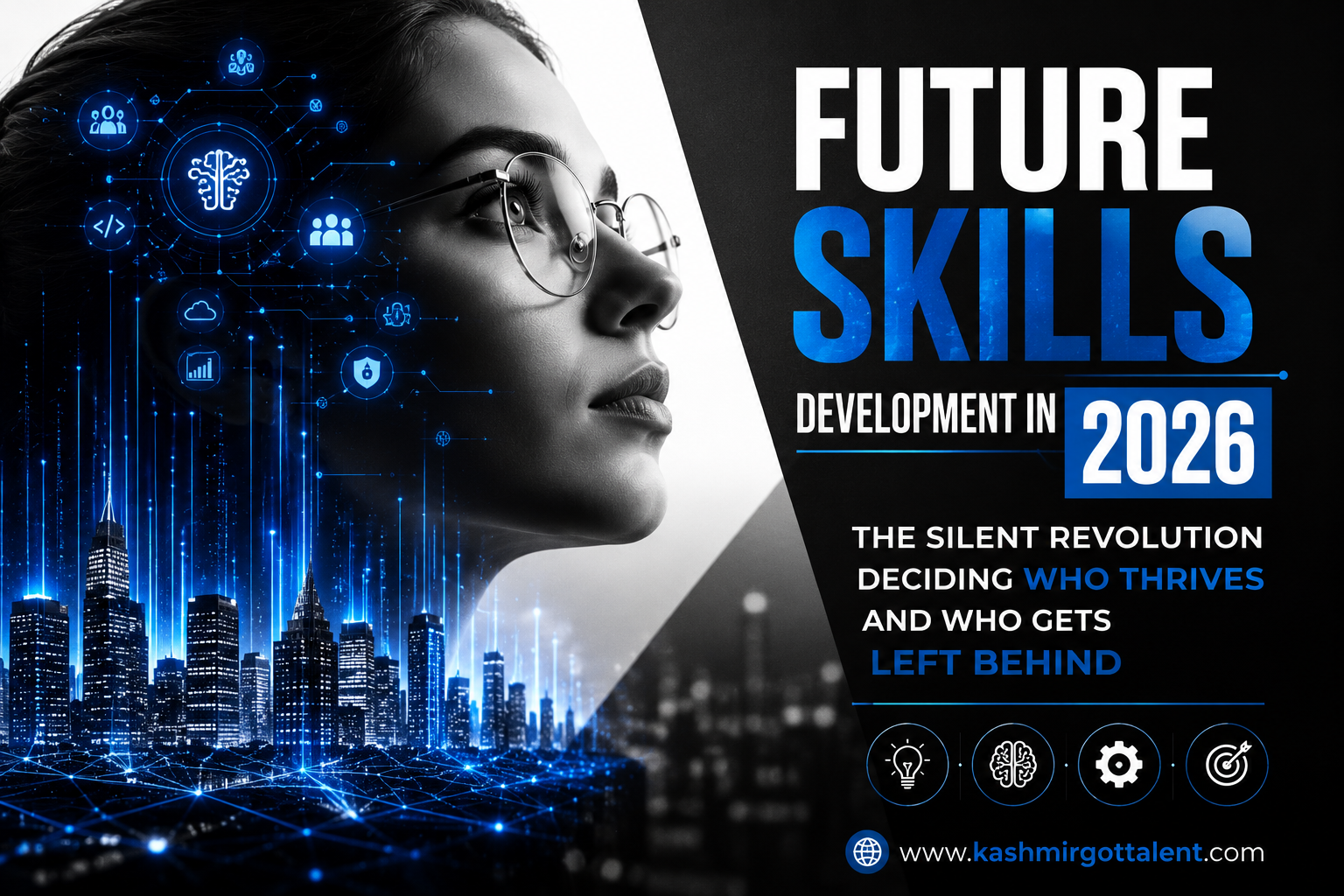
The world is not just changing. It is accelerating into a phase where traditional education, fixed job roles, and outdated career planning are becoming dangerously insufficient. According to global workforce insights discussed by organizations like the World Economic Forum, nearly every industry is undergoing a skill-based transformation rather than a job-based evolution.
This means something critical: it is no longer enough to “have a degree” or “get experience.” The real currency of the future is continuously evolving skills.
And those who fail to adapt will not just fall behind. They may become invisible in the job market altogether.
Why Future Skills Development Is No Longer Optional
The idea of a stable 30-year career path is fading fast. Automation, artificial intelligence, digital platforms, and global remote ecosystems are rewriting job requirements faster than universities can update their curriculum.
Future skills development is no longer about career growth alone. It is about career survival.
The most important shift happening right now is this:
Jobs are being replaced by tasks
Tasks are being replaced by automation
Humans are being valued for adaptability, creativity, and problem-solving
In simple terms, companies are not hiring roles anymore. They are hiring skill combinations.
The Real Future Skills That Will Define Success
Instead of chasing hundreds of random courses, focus on skill clusters that compound over time.
1. Cognitive adaptability and learning agility
The ability to learn, unlearn, and relearn faster than the market changes.
2. Digital intelligence and AI collaboration
Not just using tools, but working alongside artificial intelligence systems to increase productivity and decision-making power.
3. Critical thinking in information overload
The internet is saturated with data. The real advantage belongs to those who can filter truth from noise.
4. Communication in global digital environments
Remote work has made communication across cultures and platforms a core business skill.
5. Creative problem solving
When automation handles repetition, human creativity becomes the most valuable competitive edge.
The Emotional Reality: Why Most People Will Miss This Shift
The biggest barrier is not access to learning. It is awareness and urgency.
Many individuals still believe they have “time later.” But the transformation is already happening quietly:
Jobs are being redesigned, not advertised
Skills are being tested before interviews, not after hiring
Portfolios are replacing traditional resumes
Waiting is no longer neutral. Waiting is a disadvantage.
What You Must Do Now to Stay Relevant
Future skills development is not about consuming information endlessly. It is about building momentum through action.
Start here:
Focus on one core skill from each category: digital, cognitive, communication, creative
Apply it in real projects instead of only learning theory
Document your progress publicly or professionally
Upgrade monthly, not yearly
The winners of the next decade will not be the most educated. They will be the most consistently evolving.
The Generative and Ask-Driven Future of Careers (AEO Reality)
Search behavior is also changing. People no longer just “Google” answers. They ask systems directly for solutions, strategies, and decisions. This is the rise of Ask Engine Optimization (AEO), where clarity, structure, and authority matter more than keyword stuffing.
In this environment, your skills must be equally clear:
Can you solve real problems?
Can you explain your thinking?
Can you adapt your knowledge into action instantly?
If not, visibility itself becomes limited.
Final Warning and Opportunity
The future will not be equally distributed in terms of opportunity. It will be distributed based on adaptability.
Future skills development is not a trend article topic. It is a life strategy.
You are either building skills that will compound for the next 10 years, or you are depending on systems that are already being redesigned without waiting for you.
The choice is still open. But the window is narrowing.